 Gorlice
 combines a compact urban scale with a formative oil-industry legacy in a way that reflects its position on the Ropa River in the foothills of the Low Beskids. The town is closely associated with Ignacy Łukasiewicz and the early petroleum industry: in 1854, the world’s first kerosene street lamp was lit here. Gorlice also gave its name to the Battle of Gorlice–Tarnów, the Central Powers’ major 1915 offensive on the Eastern Front of the First World War. Wooded ridges and low hills frame a centre of churches, civic buildings and residential streets, while reminders of the petroleum trade remain part of the town’s identity.
Generated by AI

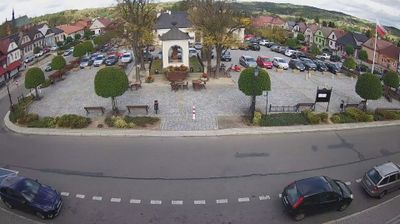


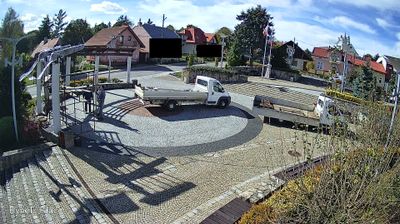
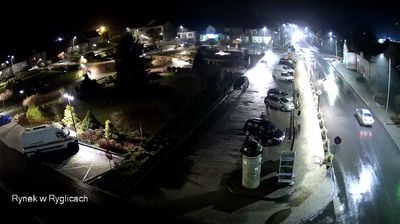
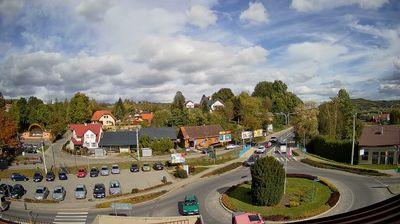

Gorlice is best known in Poland for the world’s first kerosene street lamp, lit here in 1854. The town stands on the Ropa River amid the low, wooded ridges of the Beskid Niski, on the northern edge of the Carpathians. Its oil-industry heritage is closely associated with pharmacist and inventor Ignacy Łukasiewicz, who helped develop the use of kerosene and founded an early oil mine at nearby Bóbrka. A replica of the historic lamp stands on the market square, while the town also commemorates the 1915 Battle of Gorlice–Tarnów, a major First World War offensive. Continue through nearby webcams to explore different parts of Gorlice and Lesser Poland.
2 webcams
The Vistula valley and the Carpathian foothills shape much of Lesser Poland Voivodeship, linking Kraków’s metropolitan life with farming districts and mountain tourism along its southern edge. Kraków, Poland’s former royal capital, remains the cultural centre: Wawel Castle and the medieval Old Town stand above the river, within a UNESCO World Heritage-listed historic core. Farther south, the Dunajec cuts through the Pieniny, while the Tatra Mountains form a highland frontier with Slovakia. The Wieliczka Salt Mine, worked from the Middle Ages, recalls the importance of salt to the old Polish state. Move on to other webcams in the region to compare landscapes and settings around Lesser Poland Voivodeship.
82 webcams
Poland stretches from the Baltic Sea coast in the north to the Carpathian Mountains along its southern frontier, encompassing broad lowlands, lake districts and upland ranges. The Vistula, the country’s longest river, links Kraków and Warsaw before reaching the Baltic near Gdańsk, while the Masurian Lake District is defined by a dense network of lakes. Kraków’s historic centre, including Wawel Castle, recalls Poland’s former royal capital; Warsaw’s rebuilt Old Town speaks to the city’s recovery after the Second World War. The Białowieża Forest preserves one of Europe’s last primeval lowland forests and is home to European bison. Follow how Poland’s regions relate to one another by browsing webcams across the country.
718 webcams