 Sandur: Skopun - Sandoy, Faroe Islands
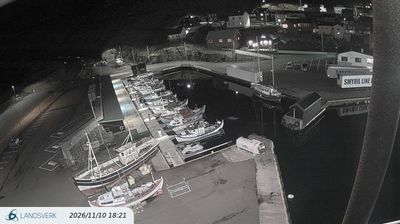
Few places in the Faroe Islands have a history as closely tied to sea travel as Skopun. In the northern part of Sandoy, the settlement faces Skopunarfjørður, the sound separating Sandoy from Streymoy. Its sheltered harbour, enclosed by substantial breakwaters, long made Skopun an essential landing point for the island, where fishing and passenger connections shaped daily life. That role changed markedly with the 2023 opening of Sandoyartunnilin, the subsea road tunnel to Streymoy. Low, largely treeless hills rise around the village, while the harbour remains a working focal point and an expression of how island communities have adapted to an exposed North Atlantic setting.
Generated by AI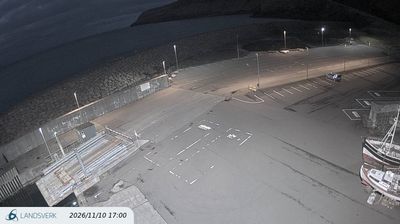


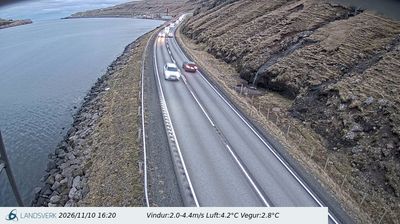
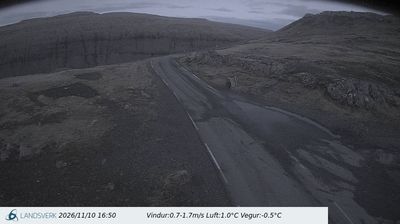
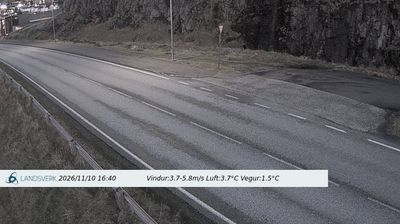

Sandsvatn and Sandoy’s low, rolling moorland define much of the Sandoy region — this gentler terrain has long supported sheep grazing and farming, giving the area a different rhythm from the Faroes’ sharper mountain islands. Sandsvatn is the archipelago’s largest lake, set close to Sandur, the island’s principal settlement. Open fields run towards a coast of bays, cliffs and North Atlantic weather. Sandur is also an important archaeological site, with evidence of Norse-age settlement. Since the Sandoyartunnilin linked the island with Streymoy in 2023, the region has become more directly connected to Tórshavn. Trace the Sandoy region’s place in the wider Faroese island chain by browsing nearby webcams.
3 webcams
Built around Norse settlements sustained by North Atlantic sea routes, the Faroe Islands developed into a self-governing archipelago within the Kingdom of Denmark. Eighteen rugged islands lie between Norway and Iceland, where steep basalt cliffs, grass-roofed houses and narrow fjords define the coast. The capital, Tórshavn, stands on Streymoy, while the sea stacks at Drangarnir and Lake Sørvágsvatn on Vágar reveal the islands’ striking geology. Faroese, descended from Old Norse, remains the everyday language, and the Løgting in Tórshavn is among the world’s oldest parliaments. Fishing and sheep farming continue to shape local life alongside a contemporary Nordic food and arts scene. Discover other points of interest through webcams located across the Faroe Islands.
50 webcams