 Toftir: Runavík - Eysturoy, Faroe Islands
The landscape around Runavík is steep and largely treeless, which has shaped both the built environment and local life. The town occupies the eastern shore of Skálafjørður, the long fjord that cuts deep into Eysturoy, the Faroe Islands’ second-largest island. Its sheltered waterfront supports a working harbour associated with fishing and aquaculture, industries central to Faroese coastal communities. Roads and neighbourhoods follow the narrow margins between the fjord and dark basalt slopes rather than a broad plain. Runavík is a comparatively modern settlement, growing around its harbour during the 20th century, yet it remains closely tied to the island’s older network of small fjord-side communities. The surrounding terrain gives the town a practical, seafaring character, with infrastructure fitted carefully into a limited strip of coastal land.
Generated by AI
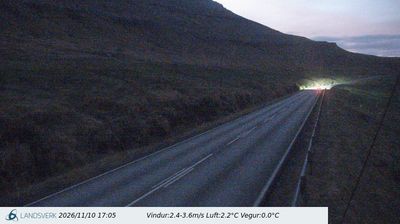
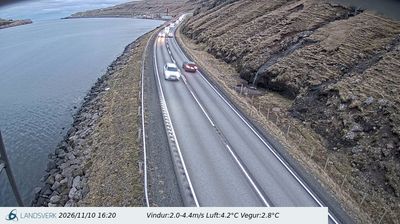
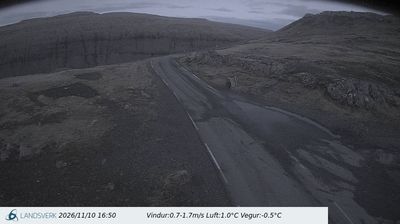
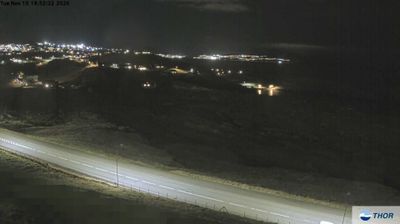
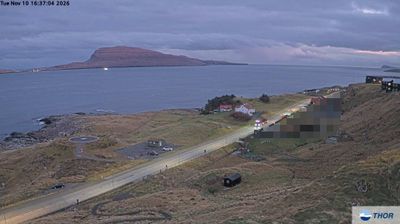

Built around North Atlantic fishing grounds, the Eysturoy region grew into an important centre of Faroese settlement and seafaring. Eysturoy, the archipelago’s second-largest island, is defined by steep green slopes, deeply cut fjords and weather from the open ocean. At 880 metres, Slættaratindur is the highest summit in the Faroes, rising above the island’s north. On the northeast coast, Gjógv is known for the long sea gorge that gives the settlement its name, while Funningur has a traditional wooden church. The Eysturoy Tunnel links the island with Streymoy beneath the sea. Explore nearby webcam locations that provide complementary perspectives on Eysturoy and the northern Faroes.
6 webcams
Built around Norse settlements sustained by North Atlantic sea routes, the Faroe Islands developed into a self-governing archipelago within the Kingdom of Denmark. Eighteen rugged islands lie between Norway and Iceland, where steep basalt cliffs, grass-roofed houses and narrow fjords define the coast. The capital, Tórshavn, stands on Streymoy, while the sea stacks at Drangarnir and Lake Sørvágsvatn on Vágar reveal the islands’ striking geology. Faroese, descended from Old Norse, remains the everyday language, and the Løgting in Tórshavn is among the world’s oldest parliaments. Fishing and sheep farming continue to shape local life alongside a contemporary Nordic food and arts scene. Discover other points of interest through webcams located across the Faroe Islands.
50 webcams