 Muhlbach - Rio di Pusteria: Gitsch
Built around a junction of historic Alpine routes, Mühlbach—Rio di Pusteria grew into a small market town where the Puster Valley meets the Eisack Valley in South Tyrol. The Rienza flows through the settlement shortly before joining the Eisack, placing it on the natural corridor between Brixen and the eastern Alps. At the valley entrance stands the Mühlbacher Klause, a fortified barrier built in the 15th century to control movement through this narrow passage. Mühlbach’s bilingual Italian-German identity is reflected in its official name and in the wider cultural character of Alto Adige/Südtirol. The municipality is also associated with the Gitschberg Jochtal mountain and ski area, whose lifts and hamlets extend across the slopes above the valleys.
Generated by AI
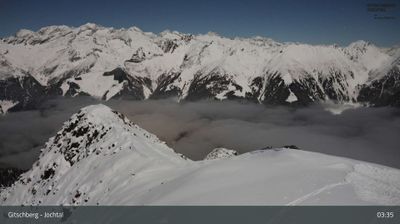
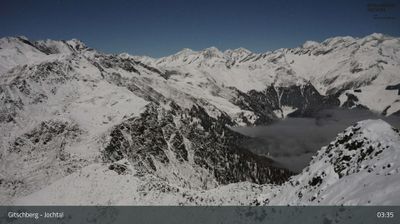


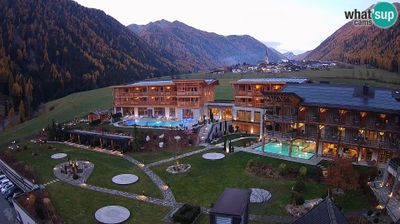
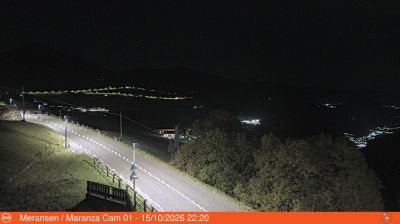

Mühlbach–Rio di Pusteria combines a compact market-town centre with the open Alpine corridors of the Puster Valley, reflecting its position where the Rienza flows into the Eisack. German and Italian are both part of everyday life in this South Tyrolean municipality, whose bilingual name reflects its setting between cultural regions. The 15th-century Mühlbacher Klause, a former defensive and customs complex, recalls the strategic importance of this route through the Alps. Trails and lifts connect the area with the Gitschberg Jochtal mountain region, while the valley remains a rail and road link between Brixen and Bruneck. Discover how Mühlbach–Rio di Pusteria belongs to the wider Eisack and Puster Valley area by browsing nearby webcams.
10 webcams
Trentino-Alto Adige/Südtirol is renowned across Italy for the Dolomites, whose pale limestone massifs define much of its eastern skyline. This autonomous region follows the upper Adige basin, from vineyards and apple orchards around Bolzano to high valleys crossed by glaciers and Alpine passes. Its character is distinctly multilingual: Italian and German are official languages, while Ladin remains in use in several Dolomite valleys. Medieval castles, Tyrolean customs and Italian city life meet in a borderland historically connected with Tyrol. Continue with other webcams from the area to see how this part of the central Alps connects regionally.
586 webcams
Among the countries of southern Europe, Italy stands out for its Mediterranean coastline and cities marked by the legacy of ancient Rome. The Alps form its northern frontier, while the Apennines run down the peninsula and the Po crosses the broad plain of the north. Rome’s Colosseum and Roman Forum recall the ancient empire; Florence is closely associated with the Renaissance, and Venice is built across a lagoon on the Adriatic. Food changes markedly between regions, from olive-oil cooking in the south to rice dishes in the Po Valley. Sicily and Sardinia add distinct island identities to a country whose regions retain strong local character. Explore nearby webcam locations that provide complementary perspectives on Italy’s coasts, cities and mountains.
2.9K webcams