 Cheonghak-dong
 combines the working rhythm of Busan Port with the steep residential terrain of Yeongdo in a way that reflects its position on Busan’s harbourfront. The district lies on Yeongdo, an island district separated from central Busan by port waters, where docks, freight routes and ship-related industries remain part of everyday urban life. Busan Harbor Bridge, opened in 2014, links Yeongdo with Nam-gu across the harbour and forms part of the road network around South Korea’s largest container port. Beyond the industrial shoreline, Yeongdo’s hills run out towards the Korea Strait. The island also includes Huinnyeoul Culture Village, a coastal neighbourhood of tightly packed homes and cultural spaces that adds another dimension to this maritime side of Busan.
Generated by AI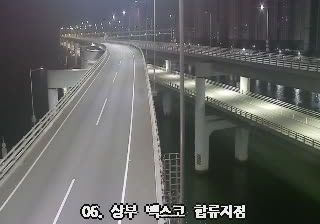





Busan’s terrain ranges from lowlands at the Nakdong River estuary in the west to wooded hills around Geumjeongsan in the north, giving the city a tightly folded coastal form. On the Korea Strait, South Korea’s second-largest city is built around an active harbour system and a long, indented shoreline. Haeundae Beach and Gwangalli Beach are among its best-known urban waterfronts, while mountain slopes remain close to dense neighbourhoods. The Port of Busan is the country’s largest, and Jagalchi Market is a major focal point of the city’s seafood trade and everyday food culture. Discover how Busan connects with the broader southeastern Korean coast by browsing webcams nearby.
6 webcams
South Korea stretches from the mountainous border with North Korea to Jeju Island, encompassing forested ranges, fertile river basins and a deeply indented southern coast. The Taebaek Mountains run along much of the east, while the Han River crosses Seoul before reaching the Yellow Sea. Busan faces the Korea Strait, and tidal flats and islands shape the country’s western shore. Seoul combines dense contemporary districts with royal Joseon sites, including Gyeongbokgung Palace, first built in 1395. Kimchi and bibimbap are central to everyday cuisine, while the Korean alphabet, Hangeul, was created in the 15th century. Find related webcams in the surrounding area to build a fuller picture of South Korea’s coasts, mountains and cities.
163 webcams