 Budapest
The Danube shapes the setting of Budapest — it separates hilly Buda from the broad Pest plain and gives Hungary’s capital its distinctive two-sided form. On the Pest bank, a dense grid of avenues, apartment buildings and commercial districts spreads far beyond the monumental centre, while the Buda Hills rise to the west. Budapest was formed in 1873 by the union of Buda, Óbuda and Pest, consolidating its role as Hungary’s political and cultural capital. The riverfront connects landmarks such as the neo-Gothic Hungarian Parliament and the Chain Bridge, while the city’s long thermal-bath tradition draws on its mineral springs.
Generated by AI




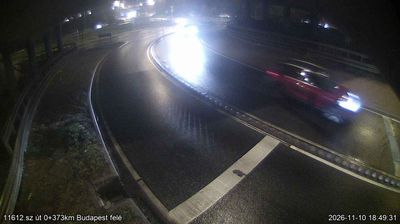

Budapest occupies both banks of the Danube in Central Hungary. The modern city was created in 1873 through the union of Buda, Pest and Óbuda: hilly Buda rises to the west, while Pest extends across the eastern plain. Castle Hill is home to Buda Castle and Matthias Church, and the 1849 Széchenyi Chain Bridge connects it with the riverside Hungarian Parliament Building. Budapest is also renowned for thermal baths supplied by natural springs, a tradition shaped by Roman and Ottoman eras. Discover other points of interest through webcams located across Budapest and Central Hungary.
16 webcams
Central Hungary stretches from the Danube Bend to the northern edge of the Great Hungarian Plain, encompassing Budapest’s hill country and the level expanses of Pest County. The Danube forms the region’s central axis, with Budapest spread across both banks and the historic Buda Castle District above the western shore. The city’s riverside panorama, Castle District and Andrássy Avenue are together inscribed as a UNESCO World Heritage site. Beyond the capital, commuter towns and farmland extend across Pest County, while the wooded Buda Hills provide a marked contrast to the plain. Browse other webcams across Central Hungary to place this setting in a wider geographic context.
164 webcams
Hungary combines a long urban tradition with expansive lowland horizons in a way that reflects its position within the Carpathian Basin. The Danube runs through Budapest, separating the hills of Buda from the grand boulevards of Pest, where the Hungarian Parliament Building stands on the riverbank. Beyond the capital, the Great Hungarian Plain shapes much of the east, while Lake Balaton, Central Europe’s largest lake, draws summer visitors to its shores. Thermal bathing remains part of everyday life, and the Tokaj region is internationally known for its historic sweet wines. Explore nearby webcam locations that provide complementary perspectives on Hungary.
743 webcams