 Braine-l'Alleud: Braine-l’Alleud: Braine
Braine-l’Alleud occupies a gently rolling plateau in Walloon Brabant. The Hain runs through this largely residential municipality, whose built-up centre lies south of Brussels amid the fields and suburbs of central Belgium. Its best-known historic association is the Battle of Waterloo: much of the 1815 battlefield lies within the municipality, including the Lion’s Mound, an artificial hill raised in the 1820s to commemorate the wounding of the Prince of Orange. Today, brick homes, local shops and green gardens give Braine-l’Alleud a settled, distinctly Belgian character, while the battlefield museums and memorials keep one of Europe’s decisive campaigns close at hand.
Generated by AI
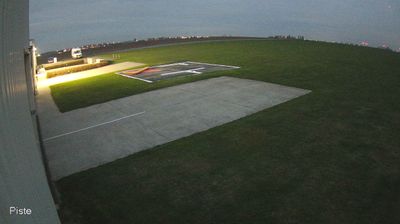






Braine-l’Alleud combines a suburban, residential rhythm with the solemn legacy of a decisive European battlefield, reflecting its position on Wallonia’s northern fringe just south of Brussels. The Hain stream crosses the municipality, while its southern districts form part of the Battlefield of Waterloo, where Napoleon was defeated on 18 June 1815. The Lion’s Mound rises over the memorial landscape, and Hougoumont Farm recalls one of the battle’s fiercest engagements. Beyond this historic terrain, the town belongs to the built-up Brussels hinterland, with Walloon villages and open fields close by. Browse other webcams across Wallonia to place Braine-l’Alleud in a wider geographic context.
1 webcam
Among Belgium’s regions, Wallonia stands out for its French-speaking identity and the Meuse and Sambre valleys that helped shape the country’s industrial age. The Meuse runs through a chain of historic towns, including Namur, where the Sambre joins it beneath the city’s citadel, and Dinant, the birthplace of saxophone inventor Adolphe Sax. South and east, the terrain rises into the Ardennes, with forests, river valleys and smaller settlements replacing the denser urban belt. Wallonia’s towns still reflect long traditions of mining, metalworking and river trade, while abbey brewing remains part of the regional culture. Browse additional webcams from the surrounding area to extend your view of Wallonia.
44 webcams
Belgium occupies a low-lying North Sea coastline and river plain in northwestern Europe. Dutch-speaking Flanders lies largely to the north, while French-speaking Wallonia reaches south towards the wooded Ardennes; Brussels is officially bilingual. The Scheldt and Meuse have long connected Belgian cities with the North Sea and continental Europe. Brussels’ Grand-Place, framed by ornate guildhalls and the Town Hall, is a UNESCO World Heritage site. Medieval Bruges retains canals and merchant architecture, while Antwerp remains a major port on the Scheldt. Belgian beer culture is recognised by UNESCO as intangible cultural heritage. See how Belgium connects with the North Sea coast and neighbouring regions by browsing webcams nearby.
89 webcams