 Walhain
Few places in Wallonia have a history as closely tied to a medieval castle lordship as Walhain. This rural municipality in Walloon Brabant extends across the gently rolling farmland of the Hesbaye plateau. The ruins of Walhain Castle, once a fortified residence, recall the settlement’s role in medieval Brabant. Walhain now brings together the villages of Walhain-Saint-Paul, Tourinnes-Saint-Lambert and Nil-Saint-Vincent-Saint-Martin. Ponds and tree-lined banks provide a quieter counterpart to the open fields, giving the commune a distinctly rural character between the larger centres of Wavre and Gembloux.
Generated by AI
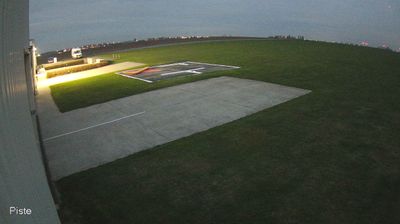
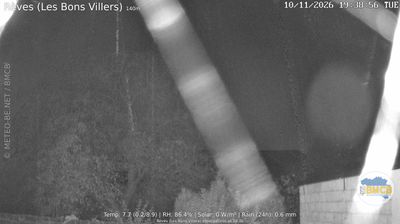


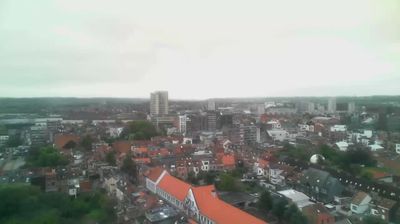
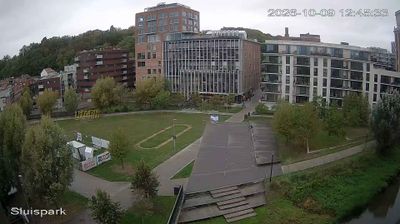

Walhain lies along the Orne in Walloon Brabant, where its position in Belgium’s agricultural interior has shaped a dispersed rural municipality. Its constituent villages include Walhain-Saint-Paul, Nil-Saint-Vincent-Saint-Martin and Tourinnes-Saint-Lambert, set among cultivated fields and country lanes between Brussels and Namur. The ruins of the medieval Château de Walhain, beside the Orne, recall the area’s former seigneurial past and remain the commune’s best-known historic landmark. Explore nearby webcam locations that provide complementary perspectives on Walhain and Walloon Brabant.
1 webcam
Among Belgium’s regions, Wallonia stands out for its French-speaking identity and the Meuse and Sambre valleys that helped shape the country’s industrial age. The Meuse runs through a chain of historic towns, including Namur, where the Sambre joins it beneath the city’s citadel, and Dinant, the birthplace of saxophone inventor Adolphe Sax. South and east, the terrain rises into the Ardennes, with forests, river valleys and smaller settlements replacing the denser urban belt. Wallonia’s towns still reflect long traditions of mining, metalworking and river trade, while abbey brewing remains part of the regional culture. Browse additional webcams from the surrounding area to extend your view of Wallonia.
46 webcams
Belgium occupies a low-lying North Sea coastline and river plain in northwestern Europe. Dutch-speaking Flanders lies largely to the north, while French-speaking Wallonia reaches south towards the wooded Ardennes; Brussels is officially bilingual. The Scheldt and Meuse have long connected Belgian cities with the North Sea and continental Europe. Brussels’ Grand-Place, framed by ornate guildhalls and the Town Hall, is a UNESCO World Heritage site. Medieval Bruges retains canals and merchant architecture, while Antwerp remains a major port on the Scheldt. Belgian beer culture is recognised by UNESCO as intangible cultural heritage. See how Belgium connects with the North Sea coast and neighbouring regions by browsing webcams nearby.
98 webcams