 Antwerp
Built around a medieval fortress on the River Scheldt, Antwerp grew into Belgium’s principal port city. The Scheldt gave the city its commercial reach, and the Port of Antwerp-Bruges remains one of Europe’s major seaports. In the old centre, the Cathedral of Our Lady dominates the skyline; its construction began in 1352 and its interior includes important works by Peter Paul Rubens, who lived and worked in Antwerp. The city also became a major centre of diamond trading from the 19th century, a role still associated with its Diamond District near Antwerpen-Centraal. Beyond the historic core, former industrial and dockland areas have been reshaped with housing, public spaces and contemporary architecture, illustrating Antwerp’s continual expansion along the river.
Generated by AI



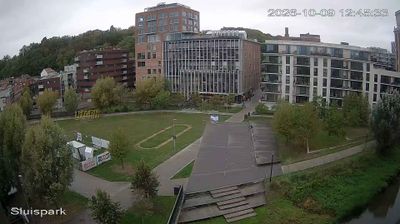
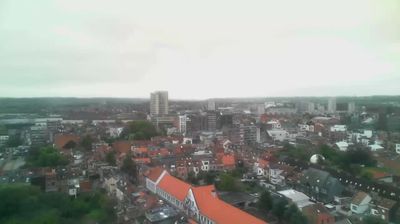
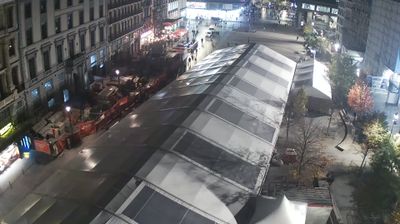


Antwerp occupies a broad bend of the River Scheldt in Flanders, close to Belgium’s border with the Netherlands. The river has long shaped the city’s commercial life: the Port of Antwerp-Bruges is one of Europe’s leading seaports, and docks extend north from the historic centre. Around the Grote Markt, ornate guildhalls and the Renaissance City Hall recall Antwerp’s prosperous sixteenth-century trading era. The Gothic Cathedral of Our Lady holds major works by Peter Paul Rubens, while the Diamond District remains central to the international diamond trade. Museums, fashion and working waterfronts give the city an outward-looking urban character. Explore nearby webcam locations that provide complementary perspectives on Antwerp and the Scheldt region.
2 webcams
Flanders occupies the low-lying northern half of Belgium. Its terrain runs from the North Sea coast and reclaimed polders to fertile river plains, with the Scheldt linking cities and ports before reaching the sea in the Netherlands. Dutch is the principal language, and the region's historic towns retain a strong civic identity: Bruges is known for its medieval centre, while Antwerp developed into one of Europe’s major port cities and a global diamond-trading centre. Flemish painting, lace-making and beer brewing remain central to the cultural story, alongside a contemporary design and food scene. Continue through nearby webcams to explore different parts of Flanders.
49 webcams
Belgium occupies a low-lying North Sea coastline and river plain in northwestern Europe. Dutch-speaking Flanders lies largely to the north, while French-speaking Wallonia reaches south towards the wooded Ardennes; Brussels is officially bilingual. The Scheldt and Meuse have long connected Belgian cities with the North Sea and continental Europe. Brussels’ Grand-Place, framed by ornate guildhalls and the Town Hall, is a UNESCO World Heritage site. Medieval Bruges retains canals and merchant architecture, while Antwerp remains a major port on the Scheldt. Belgian beer culture is recognised by UNESCO as intangible cultural heritage. See how Belgium connects with the North Sea coast and neighbouring regions by browsing webcams nearby.
98 webcams