 Lubin: Sokola - Skwer im. ks. Stefana Wyszyńskiego
Lubin has served as a copper-mining centre in Lower Silesia since the mid-20th century. Skwer im. ks. Stefana Wyszyńskiego lies within the city’s residential fabric, with Sokola Street marking one edge of this open green space. The square honours Cardinal Stefan Wyszyński, Poland’s primate from 1948 until his death in 1981. Lubin is the headquarters of KGHM Polska Miedź, the copper and silver producer established in 1961, and forms part of the Legnica–Głogów Copper District. Post-war housing estates stand alongside older central streets, while the Zimnica stream runs through the city. Grass, mature trees and pedestrian routes give this square a quieter civic role within Lubin’s densely built neighbourhoods.
Generated by AI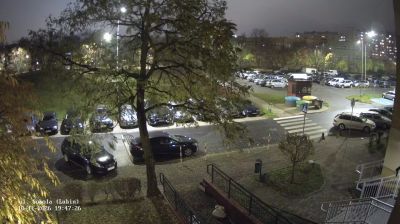
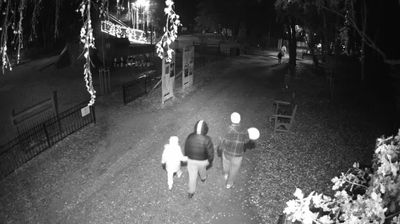

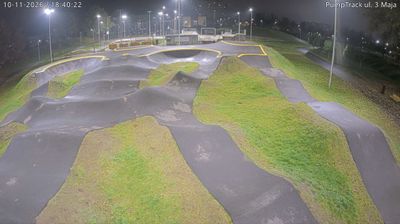
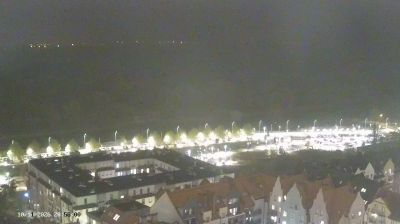
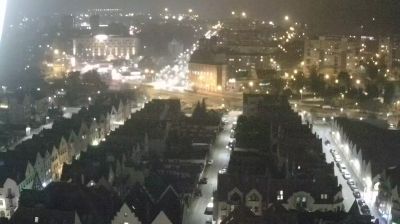
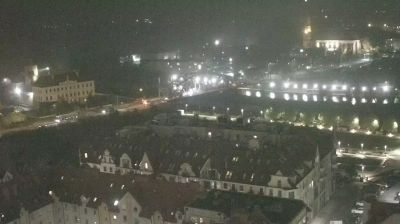
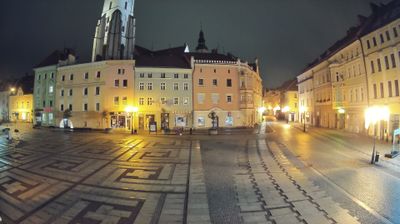
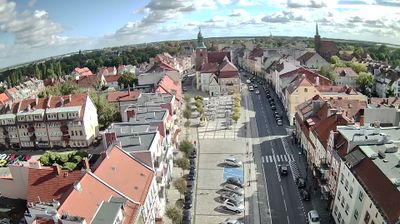
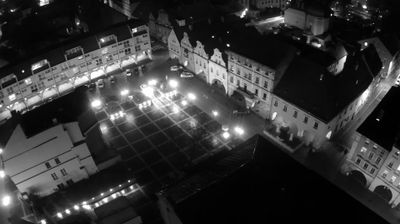

Tucked into the Lower Silesian lowlands beside the Zimnica River, Lubin is a place whose character is shaped by the copper industry. It lies in the Legnica–Głogów Copper District, where mining and processing have made this part of Poland a major centre of copper production. KGHM Polska Miedź, one of the country’s leading industrial companies, has its headquarters here, giving Lubin an identity that reaches well beyond its compact centre. The surviving Piast Castle complex recalls the city’s medieval roots, while parks and residential streets temper its industrial setting. Browse additional webcams from the Lower Silesian Voivodeship to extend your view of Poland’s copper region.
4 webcams
Among the regions of Poland, Lower Silesian Voivodeship stands out for the meeting of the Sudetes, the Oder valley and historic Wrocław. Its southern edge reaches the Karkonosze range, where Śnieżka rises as the highest peak of the Sudetes, while broad lowlands and river corridors shape the north. Wrocław is the regional centre, known for its Market Square, the cathedral district of Ostrów Tumski and the UNESCO-listed Centennial Hall. Further west, Książ Castle near Wałbrzych recalls the area’s long Silesian past. Browse additional webcams around the region to extend your view of Lower Silesia.
72 webcams
Poland stretches from the Baltic Sea coast in the north to the Carpathian Mountains along its southern frontier, encompassing broad lowlands, lake districts and upland ranges. The Vistula, the country’s longest river, links Kraków and Warsaw before reaching the Baltic near Gdańsk, while the Masurian Lake District is defined by a dense network of lakes. Kraków’s historic centre, including Wawel Castle, recalls Poland’s former royal capital; Warsaw’s rebuilt Old Town speaks to the city’s recovery after the Second World War. The Białowieża Forest preserves one of Europe’s last primeval lowland forests and is home to European bison. Follow how Poland’s regions relate to one another by browsing webcams across the country.
709 webcams