 Slupsk
The landscape around Słupsk is a lowland corridor formed by the Słupia River, which has shaped both the built environment and local life. This northern Polish city developed in historic Pomerania, where river crossings and links between the interior and Baltic coast supported trade and crafts. The compact old centre retains the Gothic St Mary’s Church and the Castle of the Dukes of Pomerania, home to the Museum of Central Pomerania. Its collections include works by Stanisław Ignacy Witkiewicz, known as Witkacy. Beyond the centre, Słupsk extends through residential districts, commercial areas and parks, with fields and woodland characteristic of the regional lowlands nearby.
Generated by AI

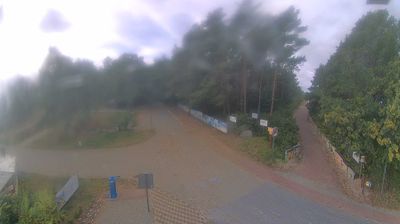
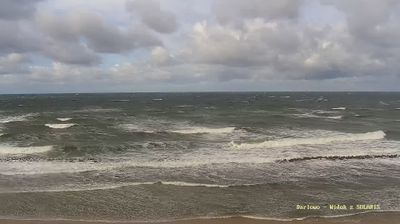



Słupsk lies along the Słupia River in northern Pomerania, where the lowland river runs north toward the Baltic Sea. The city developed as a historic centre of the Pomeranian region, and its compact core still brings together Gothic brick churches, townhouses and streets shaped by its mercantile past. The Renaissance Castle of the Pomeranian Dukes on the Słupia now houses the Museum of Central Pomerania. Its collections include works by Stanisław Ignacy Witkiewicz, known as Witkacy. Słupsk also reveals the contrast between inland Pomerania and the nearby Baltic coast. Explore nearby webcam locations that provide complementary perspectives on Słupsk and the Pomeranian Voivodeship.
3 webcams
Pomeranian Voivodeship has served as an administrative region within Poland since 1999. Stretching from the Baltic coast to the wooded Kashubian Lake District, it brings together Poland’s maritime north and an inland country of lakes and forests. The Vistula reaches the sea near Gdańsk, while the coast includes the shifting dunes of Słowiński National Park. Gdańsk, a historic Baltic port and member of the Hanseatic League, anchors the Tri-City urban area with Sopot and Gdynia. Kashubian language and traditions remain an important part of the region’s identity, particularly west of Gdańsk. See how Pomeranian Voivodeship fits within northern Poland by browsing webcams nearby.
64 webcams
Poland stretches from the Baltic Sea coast in the north to the Carpathian Mountains along its southern frontier, encompassing broad lowlands, lake districts and upland ranges. The Vistula, the country’s longest river, links Kraków and Warsaw before reaching the Baltic near Gdańsk, while the Masurian Lake District is defined by a dense network of lakes. Kraków’s historic centre, including Wawel Castle, recalls Poland’s former royal capital; Warsaw’s rebuilt Old Town speaks to the city’s recovery after the Second World War. The Białowieża Forest preserves one of Europe’s last primeval lowland forests and is home to European bison. Follow how Poland’s regions relate to one another by browsing webcams across the country.
718 webcams