 Oberageri: Lake Ägeri
Oberägeri lies along Lake Ägeri, a long, narrow body of water enclosed by wooded slopes and working pasture in the canton of Zug. The municipality is closely tied to the lakeshore, where a promenade and jetties bring the settlement to the water’s edge. Lake Ägeri drains north through the Lorze, which continues toward Lake Zug. The area also carries national historical weight: the Battle of Morgarten, fought in 1315 near the lake’s southern end, is a defining event in the early history of the Swiss Confederacy. Oberägeri combines a settled waterfront with the rural terrain of the Ägerital, setting it apart from the urban centres around nearby Lake Zug.
Generated by AI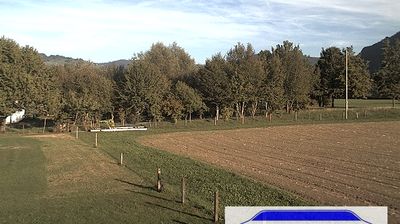
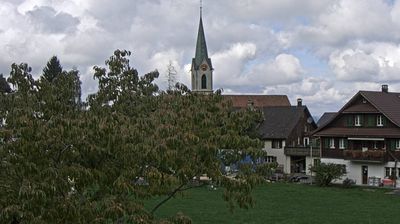
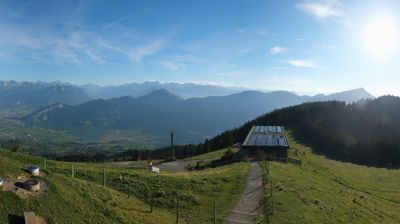
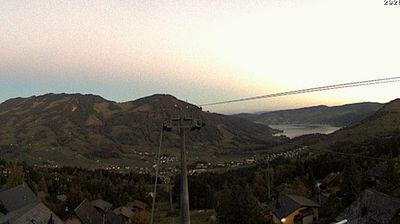
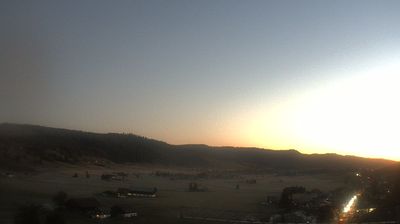
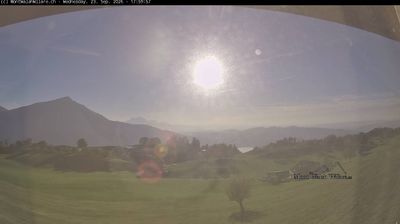
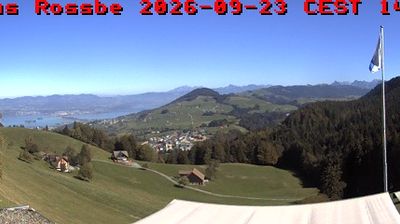
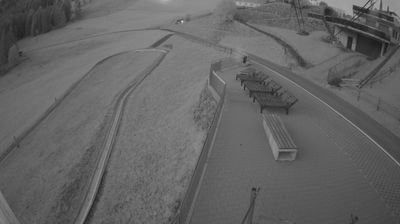
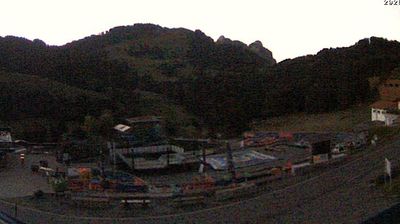

The landscape around Oberägeri is defined by the wooded foothills of the Swiss Alps and Lake Ägeri, which have shaped both the settlement pattern and local economy. In the canton of Zug, the municipality is closely connected to a setting of water, pasture and forest, with boating and walking part of its seasonal rhythm. Nearby Morgarten recalls the Battle of Morgarten in 1315, an event central to Switzerland’s national historical tradition. Oberägeri differs from the urban centres of Zug and Zürich: it is a lakeside community in the pre-Alpine interior, where daily life follows the contours of the Ägeri valley. Discover further points of interest through webcams across the canton of Zug and the Ägeri valley.
1 webcam
Zug occupies the northern shore of Lake Zug in central Switzerland. The compact city lies between the lake and the slopes of Zugerberg, with the Alps visible beyond the water on clear days. Its preserved Old Town retains narrow streets, fragments of medieval fortifications and the Zytturm, a clock tower associated with the historic centre. Lake Zug shapes local life through promenades, boats and waterside public spaces that link the urban core to the shore. Internationally associated with business and finance, Zug nevertheless remains closely connected to the lake and the rural landscapes of its canton. Explore nearby locations that provide complementary perspectives on Lake Zug and the Zugerberg slopes.
10 webcams
Switzerland stretches from the Jura Mountains in the northwest to the Alps in the south, encompassing a central plateau of cities, farms and lakes. The Rhine rises in the Swiss Alps, while Lake Geneva forms part of the country’s southwestern border. Zürich, Geneva and Basel are major urban centres, yet mountain railways and passes remain central to how many regions are experienced. Four national languages—German, French, Italian and Romansh—reflect Switzerland’s distinct cantonal identities. The Matterhorn above Zermatt is among Europe’s most recognisable peaks, and the 1291 Federal Charter is closely associated with the country’s founding tradition. Continue through nearby webcams to explore different parts of Switzerland.
996 webcams