 Alexandroupolis: Lighthouse of Alexandroupoli - Alexandroupolis Passenger Port
Tucked along the Thracian coast of the northern Aegean, Alexandroupoli is a place whose character is shaped by its long seafront and maritime connections. Alexandroupolis Passenger Port is the mainland departure point for ferries to Samothrace, the mountainous island in the northern Aegean. Beside it stands the Lighthouse of Alexandroupoli, completed in 1850 and now the city’s best-known landmark. Its light has long marked this stretch of coast, while the promenade links the port with the urban waterfront. Modern Alexandroupoli grew around the port in the late 19th century, when it was known as Dedeagach; it took its present name in 1920. The port, lighthouse and broad shoreline express the city’s role as a Greek centre of western Thrace.
Generated by AI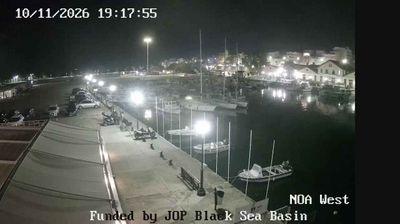
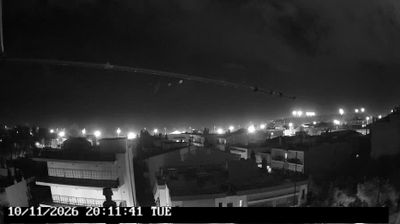

Among the cities of Macedonia and Thrace, Alexandroupoli stands out for its landmark lighthouse on Greece’s northeastern Aegean coast. The city stretches beside the Thracian Sea, where a long seafront promenade connects cafés, the port and ferry services for the island of Samothrace. East of town, the Evros Delta forms one of Greece’s most important wetland areas near the border with Turkey. Modern Alexandroupoli developed around the railway in the 19th century and was renamed in 1920 in honour of King Alexander I. Its coastal setting and position at the meeting point of Greece, the Balkans and the eastern Mediterranean give it a distinctly Thracian character. Discover other points of interest through webcams located across Macedonia and Thrace.
3 webcams
Macedonia and Thrace has served as a cultural crossroads in the Greek lands since antiquity. Around the lower Strymon River, fertile plains meet the foothills and routes that have long linked the Aegean coast with the Balkan interior. Ancient Amphipolis, founded by Athenians in 437 BC, grew beside a strategic crossing of the Strymon and later became an important Macedonian and Roman centre. Farther east, the archaeological site of Philippi recalls the Roman Via Egnatia and the region’s place in Mediterranean travel and trade. Browse other webcams across Macedonia and Thrace to place this setting in a wider geographic context.
70 webcams
Greece occupies a mountainous peninsula and island-dotted coastline in southeastern Europe. The Aegean Sea shapes its eastern shore, while the Ionian Sea lies to the west; Crete is the country’s largest island. Athens is anchored by the Acropolis, where the Parthenon has stood since the fifth century BCE as a defining monument of classical antiquity. Beyond the capital, the Pindus Mountains run through the mainland, and Mount Olympus is associated in ancient Greek religion with the home of the gods. Greek food traditions centre on olive oil, seafood, cheeses and regional dishes, with long meals remaining an important part of social life. Continue through nearby webcams to explore the islands and mainland regions of Greece.
501 webcams