 Piobbico
Built around the confluence of the Biscubio and Candigliano, Piobbico grew into a small Apennine town in northern Marche. The settlement lies beneath Monte Nerone, a 1,525-metre massif whose wooded flanks and limestone uplands form part of the central Italian Apennines. Above the town, mountain roads and paths reach open high ground, while the valleys retain woodland and scattered rural holdings. Piobbico is closely associated with the Brancaleoni family, whose palace dominates its historic centre, and with the Club dei Brutti, a local association that has given the town an unusual cultural identity. This is a quiet inland Marche setting shaped by river valleys, mountain pasture and long-established village life.
Generated by AI
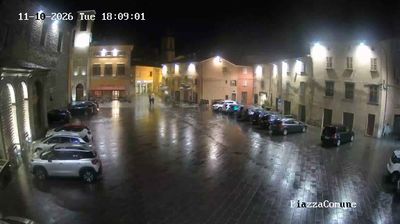
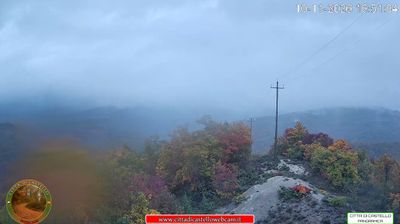

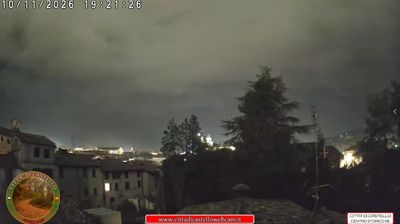

Piobbico straddles the confluence of the Candigliano and Biscubio rivers in northern Marche, a position that has concentrated the town beneath the Apennine slopes of Monte Nerone. Stone houses and narrow streets gather below Brancaleoni Castle, a fortified residence with medieval origins and later additions. Piobbico is also known across Italy for the Club dei Brutti (“Club of the Ugly”), an association that celebrates self-irony through its annual festival. The surrounding inland Marche is shaped by river valleys, wooded ridges and routes toward Urbino and the Umbrian border. Explore nearby webcam locations that provide complementary perspectives on Piobbico and northern Marche.
2 webcams
Marche combines Adriatic openness with Apennine ruggedness in a way that reflects its position between central Italy’s mountains and the sea. Its long Adriatic shore moves from broad beaches to the limestone headland of Monte Conero, south of Ancona, while inland roads cross cultivated hills toward the Sibillini Mountains. Ancona, the regional capital and a historic port, gives the coast an urban counterpoint. In the north, Urbino’s UNESCO-listed historic centre and Palazzo Ducale recall the court of Federico da Montefeltro and the Renaissance influence that reached far beyond the city. Verdicchio wines and olive ascolane are enduring local flavours. Continue with other webcams from the area to see how this part of central Italy connects regionally.
67 webcams
Among the countries of southern Europe, Italy stands out for its Mediterranean coastline and cities marked by the legacy of ancient Rome. The Alps form its northern frontier, while the Apennines run down the peninsula and the Po crosses the broad plain of the north. Rome’s Colosseum and Roman Forum recall the ancient empire; Florence is closely associated with the Renaissance, and Venice is built across a lagoon on the Adriatic. Food changes markedly between regions, from olive-oil cooking in the south to rice dishes in the Po Valley. Sicily and Sardinia add distinct island identities to a country whose regions retain strong local character. Explore nearby webcam locations that provide complementary perspectives on Italy’s coasts, cities and mountains.
3.1K webcams