 Urbino: Torricini Skyline
The Apennine foothills define the setting of Urbino — steep, folded terrain carries this walled Renaissance city across a ridge. The Torricini, the paired slender towers of the Palazzo Ducale, are its defining silhouette; the palace was developed for Duke Federico da Montefeltro in the 15th century. Under his court, Urbino became a leading centre of Italian Renaissance art and learning, and the painter Raphael was born here in 1483. Its historic centre is a UNESCO World Heritage site, where brick façades, lanes and fortifications follow the contours of the hill rather than a regular street grid. The university, founded in 1506, remains part of the city’s intellectual identity.
Generated by AI
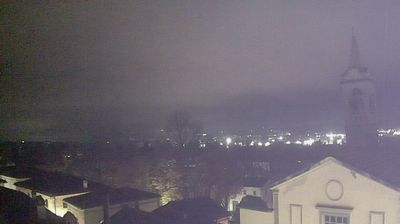
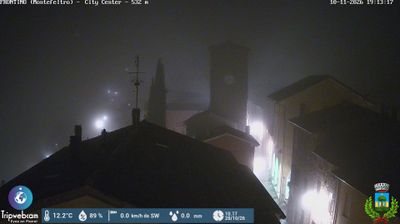
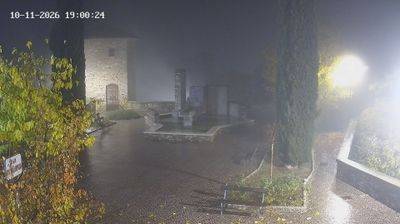

Built around a fortified hilltop, Urbino grew into one of the Italian Renaissance’s foremost court cities. Set amid the rolling uplands of Marche, near the northern Apennines, its compact historic centre rises in a sequence of steep streets and brick façades. Duke Federico da Montefeltro reshaped the city in the 15th century, giving it the Palazzo Ducale, whose architecture and collections remain central to Urbino’s identity. Painter Raphael was born here in 1483, and the old town is inscribed on UNESCO’s World Heritage List. Discover nearby webcam locations for complementary perspectives on Marche and the northern Apennines.
3 webcams
Marche combines Adriatic openness with Apennine ruggedness in a way that reflects its position between central Italy’s mountains and the sea. Its long Adriatic shore moves from broad beaches to the limestone headland of Monte Conero, south of Ancona, while inland roads cross cultivated hills toward the Sibillini Mountains. Ancona, the regional capital and a historic port, gives the coast an urban counterpoint. In the north, Urbino’s UNESCO-listed historic centre and Palazzo Ducale recall the court of Federico da Montefeltro and the Renaissance influence that reached far beyond the city. Verdicchio wines and olive ascolane are enduring local flavours. Continue with other webcams from the area to see how this part of central Italy connects regionally.
67 webcams
Among the countries of southern Europe, Italy stands out for its Mediterranean coastline and cities marked by the legacy of ancient Rome. The Alps form its northern frontier, while the Apennines run down the peninsula and the Po crosses the broad plain of the north. Rome’s Colosseum and Roman Forum recall the ancient empire; Florence is closely associated with the Renaissance, and Venice is built across a lagoon on the Adriatic. Food changes markedly between regions, from olive-oil cooking in the south to rice dishes in the Po Valley. Sicily and Sardinia add distinct island identities to a country whose regions retain strong local character. Explore nearby webcam locations that provide complementary perspectives on Italy’s coasts, cities and mountains.
2.7K webcams