 Straubing: Stadtturm Straubing
Straubing extends across the Danube plain in Lower Bavaria, where the river corridor helped it develop as a medieval market and trading town. Its Stadtturm, begun in 1316, rises 68 metres above Theresienplatz, the long central square of the planned Neustadt founded by Duke Ludwig I of Bavaria in 1218. The four-sided tower, marked by clock faces and twin green spires, remains the town’s defining vertical landmark. Theresienplatz is lined with gabled burgher houses and civic buildings, while the Danube floodplain and fertile Gäuboden countryside lie beyond the historic core. Straubing is also associated with the Gäubodenvolksfest, a major annual Bavarian fair.
Generated by AI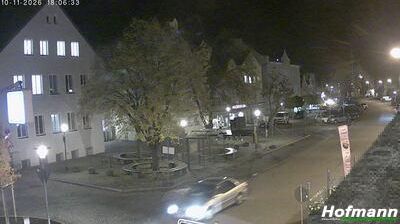



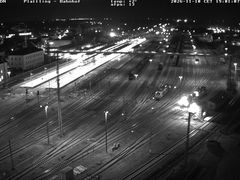


The Danube defines the setting of Straubing — its broad valley and the fertile Gäuboden plain have long supported a regional centre between Regensburg and Passau. The open lowland around the city contrasts with the Bavarian Forest farther north. Straubing’s compact old town is marked by the 68-metre Stadtturm, while the Gothic Basilica of St. Jakob reflects its medieval civic importance. Roman roots are preserved at the Gäubodenmuseum, known for the Straubing Roman Treasure. Each August, the Gäubodenvolksfest brings a major Bavarian fair tradition to the city. See how Straubing belongs to the Danube corridor and eastern Bavaria by browsing webcams nearby.
1 webcam
Built around the early medieval Duchy of Bavaria, Bavaria grew into Germany’s largest federal state. The Danube crosses its broad centre, while the Bavarian Alps form its southern edge and include the Zugspitze, Germany’s highest mountain. Munich is the state capital and the home of Oktoberfest, a festival rooted in an 1810 royal wedding. Beyond the metropolis, Franconia’s vineyards, Swabian towns and Alpine resorts reveal how varied this part of Germany can be. Browse additional webcams from the surrounding area to extend your view of Bavaria.
867 webcams
Germany stretches from the North Sea and Baltic Sea coasts to the Alps on its southern border, encompassing northern plains, river valleys and forested uplands. The Rhine, Danube and Elbe have long connected its regions, while the Black Forest and Bavarian Alps give the south a more dramatic relief. Berlin’s Brandenburg Gate and Museum Island reflect the capital’s role in German history and culture. Cologne Cathedral, a UNESCO World Heritage Site, rises above the Rhine, and the Bauhaus movement, founded in Weimar in 1919, transformed modern design far beyond Germany. Regional cooking, Christmas markets and brewing traditions bring further character to daily life. Browse additional webcams from the surrounding area to extend your view of Germany.
2.8K webcams