 Sankt Englmar
 straddles a forested ridge in the Bavarian Forest of Lower Bavaria, and this elevated position has shaped the community as a resort for outdoor recreation. Meadows and small farms occupy the more open slopes, while conifer woodland covers much of the surrounding high ground; the wider Bavarian Forest forms part of the uplands along Germany’s border with Czechia. Sankt Englmar is a state-recognised climatic health resort, with hiking, cycling and winter-sport facilities central to its visitor economy. Its name recalls Engelmar, a medieval hermit associated with the settlement, and the parish church is dedicated to him. The settlement retains a rural upland character beyond its recreational infrastructure.
Generated by AI

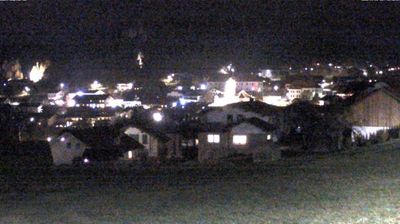


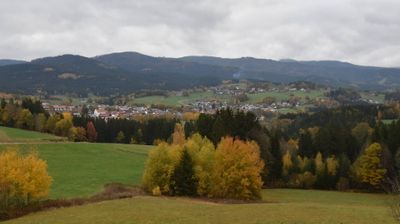
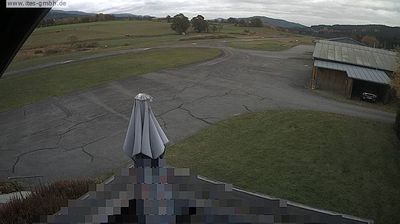

The landscape around Sankt Englmar is defined by the wooded uplands of the Bavarian Forest, which have shaped both the settlement pattern and local economy. This small resort community in Lower Bavaria lies amid rounded ridges, where the Pröller and Predigtstuhl provide terrain for walking, cycling and winter sports. Forests long determined everyday life here; today, tourism is equally central to the town’s character. Sankt Englmar takes its name from Engelmar, a medieval hermit venerated in local tradition. Browse additional webcams from the Bavarian Forest to extend your view of eastern Bavaria.
4 webcams
Built around the early medieval Duchy of Bavaria, Bavaria grew into Germany’s largest federal state. The Danube crosses its broad centre, while the Bavarian Alps form its southern edge and include the Zugspitze, Germany’s highest mountain. Munich is the state capital and the home of Oktoberfest, a festival rooted in an 1810 royal wedding. Beyond the metropolis, Franconia’s vineyards, Swabian towns and Alpine resorts reveal how varied this part of Germany can be. Browse additional webcams from the surrounding area to extend your view of Bavaria.
861 webcams
Germany stretches from the North Sea and Baltic Sea coasts to the Alps on its southern border, encompassing northern plains, river valleys and forested uplands. The Rhine, Danube and Elbe have long connected its regions, while the Black Forest and Bavarian Alps give the south a more dramatic relief. Berlin’s Brandenburg Gate and Museum Island reflect the capital’s role in German history and culture. Cologne Cathedral, a UNESCO World Heritage Site, rises above the Rhine, and the Bauhaus movement, founded in Weimar in 1919, transformed modern design far beyond Germany. Regional cooking, Christmas markets and brewing traditions bring further character to daily life. Browse additional webcams from the surrounding area to extend your view of Germany.
2.7K webcams