 District of Dolný Kubín: Orava Castle
Built around a fortified limestone crag above the Orava River, Orava Castle grew into one of Slovakia’s most imposing castle complexes. Its origins reach back to the 13th century, and the first written record dates from 1267. Rising in tiers over the village of Oravský Podzámok, the ensemble comprises lower, middle and upper castles, with palaces, towers and defensive walls shaped by Gothic, Renaissance and Neo-Gothic rebuilding. The site long guarded a route through the Orava region and later became the centre of the Orava estate. It now houses the Orava Museum, introducing the castle’s history and the traditional culture of Orava. The castle also served as a location for F. W. Murnau’s 1922 silent film Nosferatu.
Generated by AI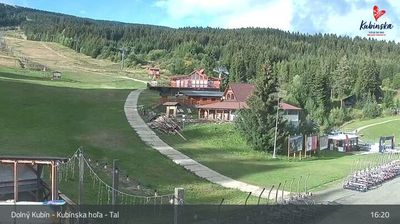
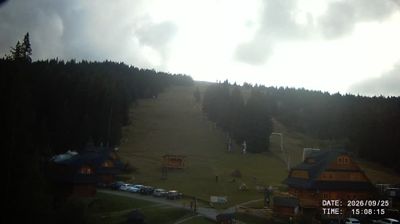
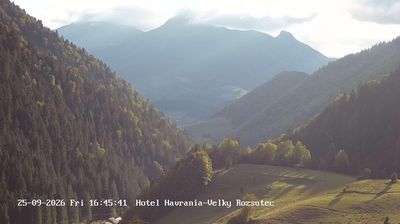
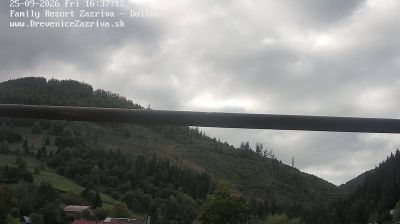


District of Dolný Kubín occupies a section of the Orava River valley between the Orava Highlands and the Choč Mountains in northern Slovakia’s Žilina Region. Its administrative centre, Dolný Kubín, is an Orava town with strong literary associations: the Literary Museum of P. O. Hviezdoslav is devoted to the poet Pavol Országh Hviezdoslav, who was born in nearby Vyšný Kubín. The Orava Gallery, housed in the historic County House, adds a cultural focus to the centre, while the river valley has long shaped local routes and settlement. Wooded ridges and mountain foothills define the district beyond the town. View additional webcams nearby to better understand how the Dolný Kubín district relates to the Orava valley and surrounding ranges.
5 webcams
The Region of Žilina is best known in Slovakia for its concentration of Carpathian mountain ranges. In the country’s north, it brings together the valleys of Orava, Kysuce, Liptov and Turiec, with the Váh—Slovakia’s longest river—running through its central corridor. Malá Fatra is a defining presence, while parts of the Western Tatras and the High Tatras lie within the region. Orava Castle, set high above the Orava River, is among Slovakia’s best-known medieval fortresses. Near Ružomberok, Vlkolínec preserves a traditional mountain settlement inscribed on the UNESCO World Heritage List. Discover how the Region of Žilina connects with northern Slovakia by browsing webcams in the surrounding area.
66 webcams
Slovakia is best known internationally for the High Tatras, whose granite summits form the country’s most celebrated mountain landscape. Gerlachovský štít, at 2,655 metres, is the highest peak in Slovakia and in the Carpathians. The Danube runs past Bratislava, where Bratislava Castle stands on a hill above the river, linking the capital to Central Europe’s major waterway. Beyond the cities, forests, karst terrain and small historic towns define much of the country. Slovakia’s long folk tradition is also represented by the fujara, a large shepherd’s flute recognised by UNESCO. Browse additional webcams from the surrounding area to extend your view of the High Tatras and the Danube region.
282 webcams