 Noirmoutier-en-l'Ile: Plage des Dames
Noirmoutier-en-l’Île has served as a salt-producing centre on Noirmoutier Island since the Middle Ages. Plage des Dames lies beside the Bois de la Chaise, a coastal woodland on the island’s eastern shore, where the Atlantic coast combines a broad sandy strand with rocky edges. Its long wooden jetty and rows of beach cabins have made it one of Noirmoutier’s most recognisable seafront settings. The island’s identity remains closely linked to salt marshes, fishing and the cultivation of the celebrated Bonnotte potato. Noirmoutier is connected to the mainland by a bridge and, when tides permit, by the Passage du Gois causeway.
Generated by AI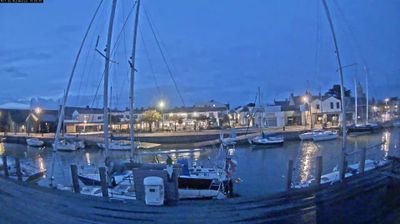
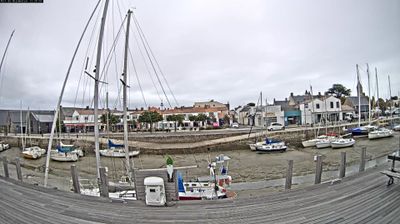
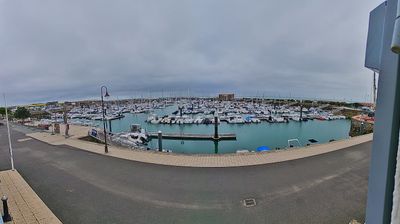


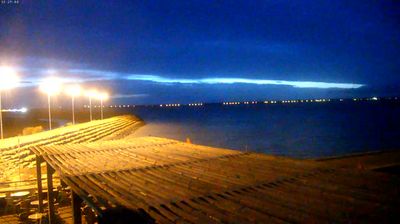
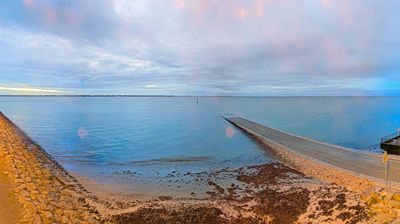
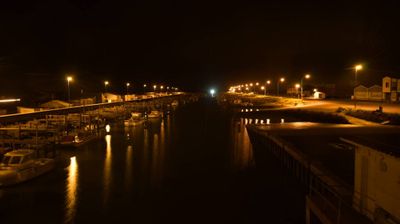
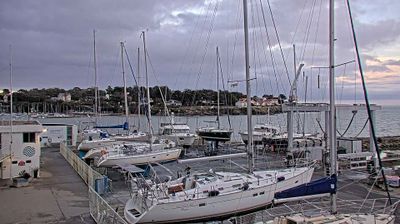

Built around the abbey founded by Saint Philibert, Noirmoutier-en-l’Île grew into the principal town of Noirmoutier Island. The island lies between the Atlantic Ocean and the Bay of Bourgneuf, where salt marshes have long shaped local work and cuisine; Noirmoutier potatoes, grown in sandy soils, are a noted regional produce. The medieval Château de Noirmoutier, with its Romanesque keep, recalls a period when the island needed coastal defence. South of town, the Passage du Gois is a tidal causeway to the mainland, covered by the sea at high tide. Continue with other webcams from the area to see how this part of the Pays de la Loire coast connects regionally.
4 webcams
The Loire River defines much of Pays de la Loire — its broad valley has long supported vineyards, market gardening and river towns. This western French region extends from the Atlantic coast to inland farmland and includes Nantes, Angers, Le Mans and the Vendée. In Angers, the medieval Château d’Angers holds the Apocalypse Tapestry, a major late-medieval work commissioned by Louis I, Duke of Anjou. Nantes developed as an important Loire port, while the river is also followed by the Loire à Vélo cycling route. Continue through nearby webcams to explore different parts of Pays de la Loire.
79 webcams
The Atlantic and Mediterranean coastlines, together with the Alps, Pyrenees and broad river basins, define much of France — they support maritime trade, farming, wine regions and travel throughout the year. The Seine runs through Paris, where the Eiffel Tower and the Louvre are among Europe’s most recognised landmarks. The Loire Valley is known for Renaissance châteaux, while Mont-Saint-Michel rises from a tidal bay in Normandy. Regional food traditions are equally distinctive, from Breton seafood to Provençal cooking, with bread, cheese and wine central to everyday life. France’s global cultural influence is evident in its language, literature, fashion and cinema. View additional webcams nearby to better understand how France’s coasts, plains and mountain borders relate to their surroundings.
2.2K webcams