 Taormina: Porticciolo Saja Giardini Naxos
Porticciolo Saja lies along the Ionian coast at Giardini Naxos, where the broad curve of Naxos Bay meets the lower slopes beneath Taormina. This small harbour belongs to a seafront town developed beside ancient Naxos, traditionally dated to 734 BC and regarded as the first Greek settlement in Sicily. The Archaeological Park of Naxos preserves parts of that early colony, including its street grid and defensive works. Across the bay, Taormina occupies a higher terrace above the sea, while Giardini Naxos remains closely tied to its waterfront, beaches, restaurants and boating activity. Together, the two places express the distinct character of eastern Sicily’s Ionian shore.
Generated by AI
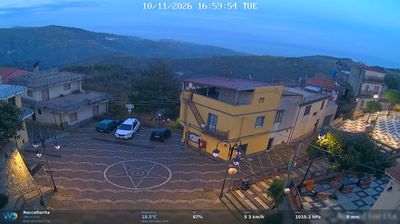
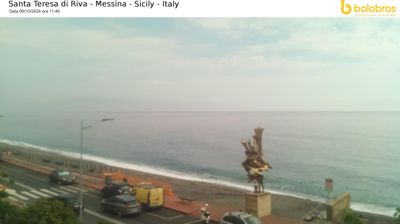
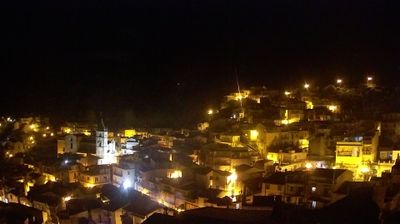


Taormina is best known within Sicily for its ancient Greek Theatre, a third-century BC auditorium later adapted by the Romans. Perched on a hillside above the Ionian Sea, the town faces Sicily’s eastern coast, with Mount Etna rising to the south-west on clear days. Corso Umberto runs through the historic centre, while Piazza IX Aprile and the medieval Palazzo Corvaja reflect Taormina’s Greek, Roman, Arab and Norman layers. Below the town, Isola Bella is a small island nature reserve connected to the shore by a narrow strip of beach. Continue through nearby webcams to explore different parts of Taormina and eastern Sicily.
2 webcams
Sicily stretches from the Strait of Messina to Capo Passero, encompassing volcanic highlands, fertile plains and long Mediterranean coasts. Mount Etna, Europe’s highest active volcano, dominates the east, while the island’s interior is marked by cultivated land and hill towns. Off the northern coast lie the volcanic Aeolian Islands. Palermo’s Arab-Norman monuments reflect centuries of Mediterranean exchange, and Agrigento’s Valley of the Temples preserves major remains of the Greek world. Browse additional webcams from the surrounding area to extend your view of Sicily.
104 webcams
Among the countries of southern Europe, Italy stands out for its Mediterranean coastline and cities marked by the legacy of ancient Rome. The Alps form its northern frontier, while the Apennines run down the peninsula and the Po crosses the broad plain of the north. Rome’s Colosseum and Roman Forum recall the ancient empire; Florence is closely associated with the Renaissance, and Venice is built across a lagoon on the Adriatic. Food changes markedly between regions, from olive-oil cooking in the south to rice dishes in the Po Valley. Sicily and Sardinia add distinct island identities to a country whose regions retain strong local character. Explore nearby webcam locations that provide complementary perspectives on Italy’s coasts, cities and mountains.
3.1K webcams