 Brena Alta: Plaza de La Lealtad - Iglesia De San Pedro Apostol
Breña Alta combines the civic calm of San Pedro with the steep island terrain of La Palma in a way that reflects its position on the Atlantic-facing eastern side of the island. Iglesia de San Pedro Apóstol stands beside Plaza de la Lealtad in San Pedro, the municipal centre, giving this built-up area a clear public focus. Its whitewashed walls, dark volcanic-stone details and clock tower belong to an architectural language found across La Palma. Breña Alta occupies slopes above the island’s east coast, where homes and local services follow terrain shaped by volcanic origins. La Palma, part of Spain’s Canary Islands, is an Atlantic island whose settlement pattern shifts quickly from coastal towns to upland neighbourhoods. The church and square express the everyday civic side of the island alongside its volcanic character.
Generated by AI

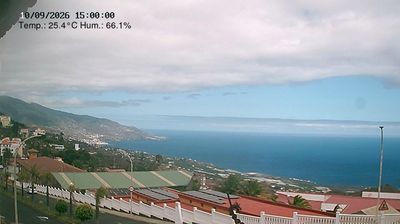

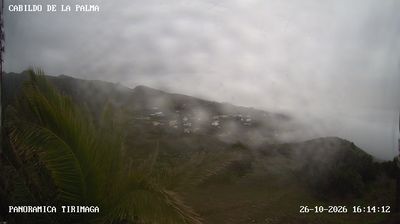
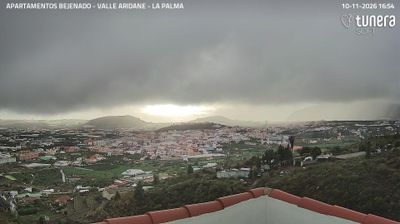
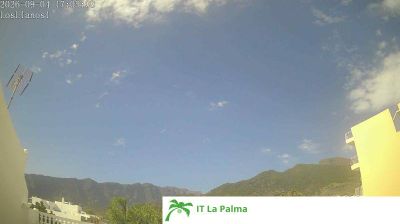
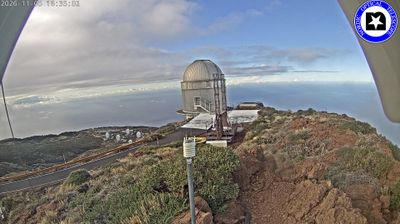
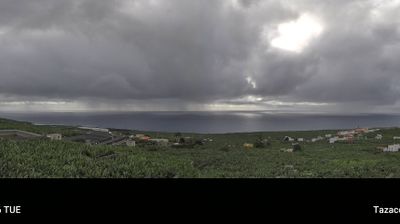

Brena Alta (Breña Alta) follows the eastern slopes beneath the Cumbre Nueva ridge on La Palma in the Canary Islands, a setting that has shaped it into a settled, cultivated belt above the island’s capital, Santa Cruz de La Palma. Its municipal centre, San Pedro, is marked by the parish church of San Pedro Apóstol. The Museo del Puro Palmero records La Palma’s tobacco and hand-rolled cigar tradition, an enduring part of the island’s rural economy. Forested uplands rise toward the ridge, while the Atlantic lies beyond the developed eastern coast. View additional webcams nearby to better understand how Breña Alta relates to the slopes of La Palma.
3 webcams
The Canary Islands have served as an Atlantic crossroads within Spain since the fifteenth century. This volcanic archipelago lies off northwestern Africa, where the Atlantic Ocean, trade winds and sharply varying terrain shape climates ranging from dry coasts to cool uplands. Tenerife is home to Mount Teide, Spain’s highest peak, while the Teide National Park is a UNESCO World Heritage Site. Across the islands, black-sand shores, lava fields and cultivated slopes reflect their volcanic origins. Carnival traditions, especially those of Santa Cruz de Tenerife, remain an important part of the local calendar. View additional webcams nearby to better understand how the Canary Islands relate to the Atlantic and to one another.
73 webcams
Spain extends from the Cantabrian coast to the Canary Islands, encompassing Atlantic shores, Mediterranean beaches and the broad interior Meseta. The Pyrenees form its northeastern frontier, while the Guadalquivir crosses Andalusia on its way to the Atlantic. Madrid anchors the country’s political and cultural life, but distinct regional identities are central to Spain’s character: Catalonia, the Basque Country, Galicia and Andalusia each have their own languages or strong local traditions. Granada’s Alhambra is a major monument of the medieval Nasrid dynasty, and Santiago de Compostela remains the destination of the Camino de Santiago. Browse related webcams around the Iberian Peninsula to build a fuller picture of Spain.
1.4K webcams