 Родниковское городское поселение
Rodniki is best known within Ivanovo Oblast for its longstanding textile industry. The town developed from factory settlements and belongs to the manufacturing belt that made Ivanovo Oblast one of Russia’s principal textile regions. It lies in the settled inland terrain of central European Russia, where low relief and small-scale residential development shape the surroundings. Rodniki’s character extends beyond its industrial past into neighbourhoods of detached wooden and brick houses, fenced plots and kitchen gardens. Its name means “springs” in Russian, a familiar word in the rural vocabulary of this part of the country. Today, the town combines everyday residential life with the legacy of textile production.
Generated by AI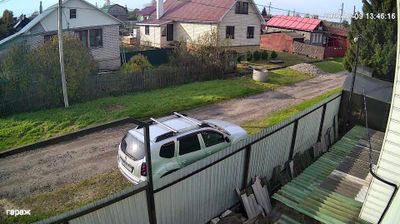
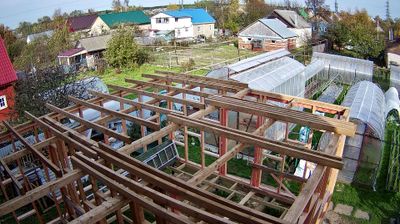

Built around textile mills, Rodnikovskoye gorodskoye poseleniye grew into the urban area centred on Rodniki, a town on the Yuksha River in Ivanovo Oblast. First recorded in 1606, Rodniki developed from a rural settlement into one of the region’s textile-manufacturing centres, and that industrial heritage remains central to its identity. The Yuksha belongs to the Volga basin, while the surrounding district has the wooded, gently rolling terrain typical of central European Russia. Rodniki retains the practical scale and everyday rhythm of a working town and district centre. Continue through nearby webcams to explore different parts of Ivanovo Oblast.
3 webcams
Among the regions of Russia, Ivanovo Oblast stands out for its long-established textile industry, centred on Ivanovo, the administrative capital. Set in the northeast of European Russia, it is crossed by the Klyazma River and reaches the Volga near the historic town of Plyos. Ivanovo developed rapidly as a textile-manufacturing centre in the 19th century; factories and workers’ districts remain central to its urban identity. Plyos, long associated with painter Isaac Levitan, adds a quieter Volga-side cultural note. Forest, farmland and small towns frame the area beyond the industrial cities. Discover how Ivanovo Oblast connects with central Russia by browsing webcams nearby.
3 webcams
Russia has served as a major power between Europe and Asia since the 16th century. Its territory crosses eleven time zones, extending from the Baltic coast and the East European Plain over the Ural Mountains to the Pacific. The Volga, Europe’s longest river, runs through a core of historic Russian settlement, while Lake Baikal in Siberia is the world’s deepest lake. Moscow’s Kremlin and Red Square stand at the centre of the capital’s political and architectural heritage; Saint Petersburg’s Hermitage Museum occupies the Winter Palace. Orthodox churches, Russian-language literature, ballet and long-distance rail travel remain familiar reference points in a country of immense regional contrasts. Continue with other webcams from Russia to see how this part of northern Eurasia connects regionally.
457 webcams