 Zadar: Trg Petra Zoranića
Few places in Dalmatia have a history as closely bound to Venetian rule as Zadar. Set on a peninsula beside the Adriatic Sea, the city brings Roman remains, medieval churches and defensive works into a compact historic core. The Roman Forum, laid out beside the Church of St Donatus, preserves the footprint of the ancient settlement; the church dates from the 9th century and is a landmark of early medieval Croatian architecture. Zadar’s landward walls and gates form part of the UNESCO-listed Venetian Works of Defence. Five Wells Square and the Captain’s Tower recall the fortified past of the city, while the waterfront opens towards the Zadar Channel and the islands beyond.
Generated by AI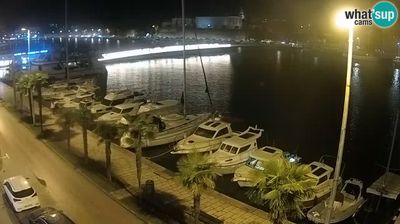


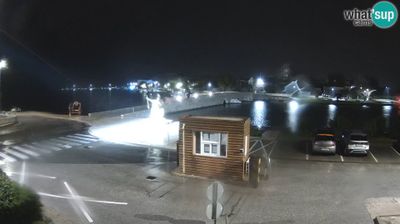
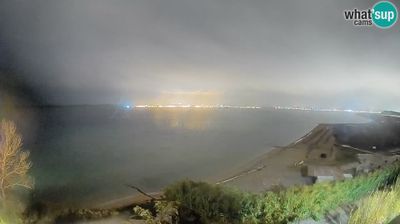


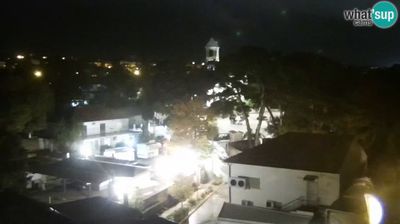


Zadar combines a compact, stone-built old town with an open Adriatic waterfront in a way that reflects its position on Croatia’s Dalmatian coast. The historic core occupies a peninsula, where the Roman Forum stands beside the 9th-century Church of St Donatus, one of the city’s defining early-medieval monuments. Along the shore, Nikola Bašić’s Sea Organ uses the movement of Adriatic waves to produce changing tones, while the nearby Greeting to the Sun installation comes alive after dark. Zadar’s Venetian-era fortifications also form part of the UNESCO-listed Venetian Works of Defence. See how Zadar belongs to the broader Dalmatian coast by browsing webcams nearby.
3 webcams
Zadar County extends from the slopes of the Velebit range to the islands of the Zadar archipelago, encompassing a karst hinterland, a long Adriatic shore and scattered islands. Its county seat, Zadar, preserves a Roman Forum beside the early-medieval Church of St Donatus, one of the city’s defining monuments. Beyond the city, Paklenica National Park protects dramatic canyons on Velebit, while the Zrmanja River cuts through inland karst before reaching the sea. Ferries bind the coast to islands including Dugi Otok, Ugljan and Pašman, where olive growing, fishing and stone-built settlements remain part of local life. Browse additional webcams nearby to better understand how Zadar County relates to the Adriatic coast and its islands.
41 webcams
Croatia occupies a long Adriatic coastline in southeastern Europe. Its shore is broken into islands and sheltered coves, while the Dinaric Alps rise inland and the Danube forms part of its eastern border. Dubrovnik’s fortified old city faces the sea, and Split grew around Diocletian’s Palace, a Roman complex begun in the early fourth century. Inland, Plitvice Lakes National Park is known for terraced lakes linked by waterfalls and has been a UNESCO World Heritage Site since 1979. Istrian olive groves, Zagreb and Slavonia’s vineyards reveal distinct regional identities. Explore nearby webcam locations that provide complementary perspectives on the Adriatic coast and Croatia’s interior.
381 webcams