 Yport
Yport combines the working character of a shorefront village with the dramatic scale of Normandy’s chalk coast in a way that reflects its position on the English Channel. Set on the Côte d’Albâtre between Fécamp and Étretat, it is framed by pale cliffs cut by a narrow valleuse, the dry valley that gives access to the sea. A broad pebble beach, boat-launch area and shoreline promenade remain central to local life, while the tide exposes dark rock shelves along the water’s edge. Yport developed from a fishing settlement into a seaside resort in the 19th century, yet it has retained a compact, residential feel rather than the scale of a major resort. The Church of Notre-Dame stands above the shore, and village lanes climb from the beach into the Pays de Caux.
Generated by AI
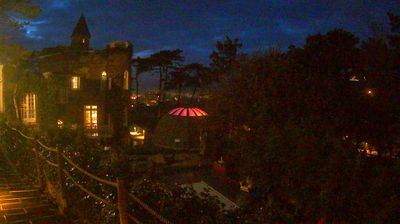


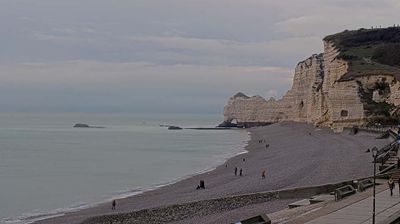
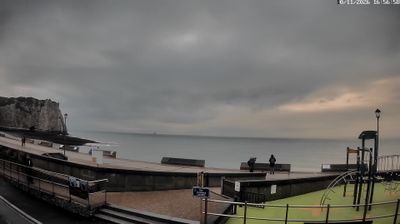



Built around a sheltered shingle cove beneath the chalk cliffs of Normandy’s Côte d’Albâtre, Yport developed from a fishing village into a small seaside resort. Set on the English Channel between Étretat and Fécamp, the town is framed by steep pale cliffs rather than a wide sandy shore, giving it a compact coastal character. Fishing remains central to Yport’s identity, while its growth as a holiday destination in the late 19th century brought villas and a distinctly resort-oriented seafront. The surrounding Pays de Caux places open farmland remarkably close to the coast. Browse additional webcams from the surrounding area to extend your view of Yport and the Côte d’Albâtre.
1 webcam
Among France’s regions, Normandy stands out for its Channel coast, fertile farmland and enduring links to medieval and modern European history. The English Channel frames a shoreline of broad beaches, cliffs and working ports, while the Seine crosses the eastern part of the region before reaching the sea near Le Havre. Rouen’s Gothic cathedral and the Bayeux Tapestry are major cultural reference points. Along the Calvados coast, the D-Day landing beaches recall the Allied landings of 1944. Normandy is also closely associated with cider, Camembert and dairy farming, traditions rooted in its green pastures. Move on to other webcams in the region to compare landscapes and settings around Normandy.
103 webcams
The Atlantic and Mediterranean coastlines, together with the Alps, Pyrenees and broad river basins, define much of France — they support maritime trade, farming, wine regions and travel throughout the year. The Seine runs through Paris, where the Eiffel Tower and the Louvre are among Europe’s most recognised landmarks. The Loire Valley is known for Renaissance châteaux, while Mont-Saint-Michel rises from a tidal bay in Normandy. Regional food traditions are equally distinctive, from Breton seafood to Provençal cooking, with bread, cheese and wine central to everyday life. France’s global cultural influence is evident in its language, literature, fashion and cinema. View additional webcams nearby to better understand how France’s coasts, plains and mountain borders relate to their surroundings.
2.1K webcams