 Urbar: Moselmündung - Kaiser-Wilhelm Monument - Altstadt Koblenz - Balduinbrücke
The landscape around Koblenz is defined by the confluence of the Rhine and Moselle, which has shaped both the built environment and local life. At Deutsches Eck, the Moselle enters the Rhine beneath the Kaiser Wilhelm Monument, inaugurated in 1897 in honour of Emperor Wilhelm I. Its original equestrian statue was destroyed during the Second World War and replaced by a replica in 1993. Koblenz’s Altstadt extends south of the junction, with narrow streets and squares around historic churches. The Balduinbrücke crosses the Moselle nearby; begun in 1343 under Archbishop Baldwin of Luxembourg, it remains one of the city’s key medieval structures. River navigation and cruises continue to define this important Rhineland meeting point.
Generated by AI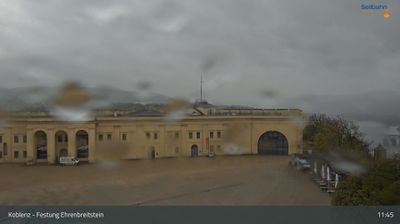
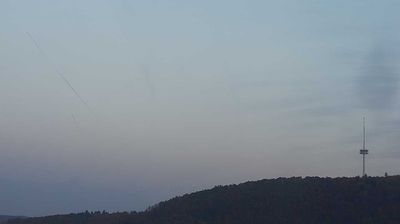
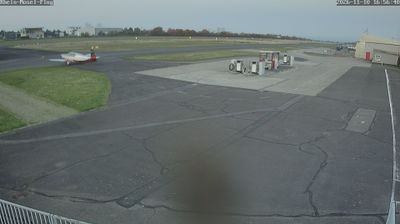
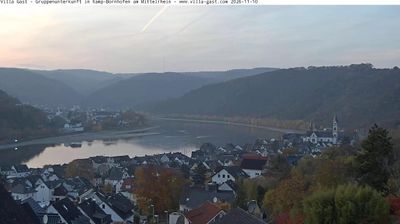
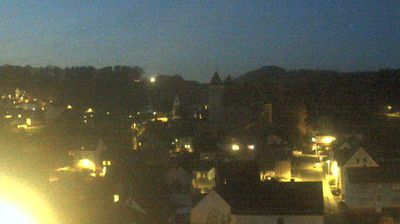

Among the communities of Rhineland-Palatinate, Urbar stands out for its position on the wooded heights above the Rhine near Koblenz. The municipality lies between the river corridor and the lower Westerwald, where steep valley sides give way to upland woods and settled plateaus. Koblenz, at the confluence of the Rhine and Moselle, is close by, while Ehrenbreitstein Fortress recalls the military importance long attached to this stretch of river. Urbar is a quieter base within reach of the Rhine’s urban and cultural landmarks. Place Urbar in its wider Rhine valley setting by browsing webcams around Koblenz and the Westerwald.
1 webcam
The Rhine and Moselle define much of Rhineland-Palatinate – their valleys have long concentrated vineyards, river transport and historic towns. Inland, the wooded Hunsrück plateau contrasts with the vine-covered slopes of the Moselle, Nahe and Mittelrhein wine areas. Trier preserves the Porta Nigra, a Roman city gate within the UNESCO-listed Roman Monuments of Trier. The state also includes part of the UNESCO-listed Upper Middle Rhine Valley, where castles, terraces and riverside settlements shape a celebrated cultural landscape. Wine festivals and the autumn harvest remain central to local life. Browse other webcams across Rhineland-Palatinate to place this setting in a wider geographic context.
123 webcams
Germany stretches from the North Sea and Baltic Sea coasts to the Alps on its southern border, encompassing northern plains, river valleys and forested uplands. The Rhine, Danube and Elbe have long connected its regions, while the Black Forest and Bavarian Alps give the south a more dramatic relief. Berlin’s Brandenburg Gate and Museum Island reflect the capital’s role in German history and culture. Cologne Cathedral, a UNESCO World Heritage Site, rises above the Rhine, and the Bauhaus movement, founded in Weimar in 1919, transformed modern design far beyond Germany. Regional cooking, Christmas markets and brewing traditions bring further character to daily life. Browse additional webcams from the surrounding area to extend your view of Germany.
2.8K webcams