 Trzic
Tržič combines an Alpine setting with a long mercantile tradition in a way that reflects its position at the foot of the Karavanks. The town stands on the Tržiška Bistrica, close to the route through Ljubelj Pass towards Carinthia. Its old centre preserves tightly grouped houses and former workshops shaped by trade and craft. Shoemaking became a major local industry in the 19th century, a heritage still celebrated during the annual Šuštarska nedelja festival. Forested slopes rise directly beyond the town, placing Tržič in one of Slovenia’s defining mountain border regions.
Generated by AI
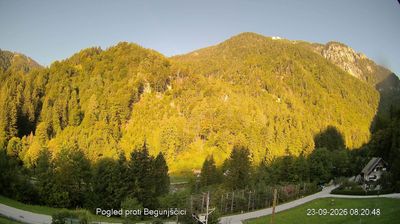

Tucked between the Karawanks and the Tržiška Bistrica River, Tržič is a place whose character is shaped by its Alpine valley setting. The town grew on the old route across Ljubelj Pass, which linked Carniola with Carinthia, and trade long supported its workshops. Tržič became particularly associated with shoemaking; this industrial-craft legacy is documented by the Tržič Museum. Its compact centre reflects rebuilding after the destructive fire of 1811, while the surrounding slopes lead toward hiking country below the Karawanks. Browse additional webcams from the surrounding area to extend your view of Tržič and the Slovenian Alps.
7 webcams
Slovenia occupies a meeting point of the Alps, the Pannonian Plain, the Dinaric mountains and the Adriatic coast in south-central Europe. The Julian Alps rise in the northwest, where Triglav is the country’s highest mountain, while the Soča River is known for its clear turquoise water. Karst terrain has shaped caves such as Postojna Cave and the Škocjan Caves, a UNESCO World Heritage site. Ljubljana combines a riverside old town with works by architect Jože Plečnik; farther east, wine-growing regions and thermal springs add another dimension. Slovenian food reflects Alpine, Mediterranean and Balkan influences. Find related webcams in the surrounding area to build a fuller picture of Slovenia and the northern Adriatic.
783 webcams