 Trieste: TRIESTE
Among the places of Friuli-Venezia Giulia, Trieste stands out for its deep natural harbour on the Gulf of Trieste, at the meeting point of the Adriatic and the Karst plateau. The city’s broad waterfront and dense 19th-century quarters reflect its long role as the Habsburg Empire’s principal seaport, a status consolidated when it was made a free port in 1719. Piazza Unità d’Italia, facing the sea, is one of the defining spaces of the centre, while Miramare Castle occupies a rocky promontory northwest of town. Italian, Slovenian and Central European influences remain part of Trieste’s character, especially in its cafés and literary associations with James Joyce and Italo Svevo.
Generated by AI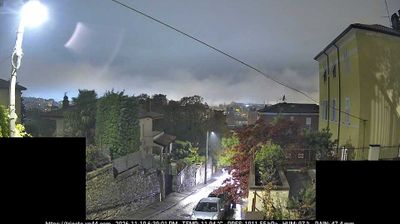
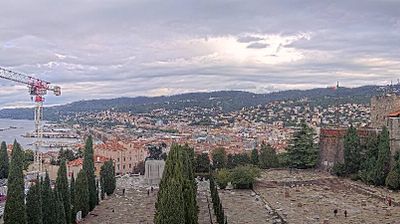

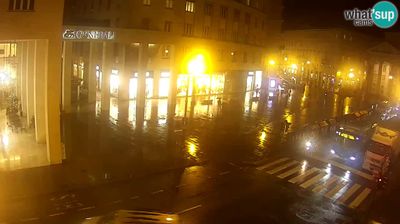
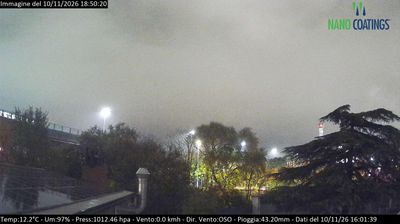
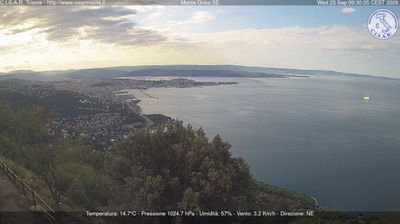

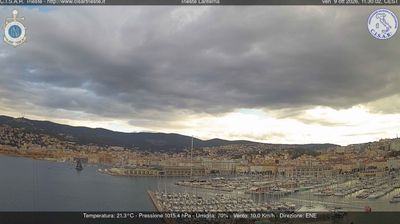


Trieste combines an Italian urban pulse with a distinctly Central European legacy in a way that reflects its Adriatic position beside Slovenia. The city curves around the Gulf of Trieste, where the Bora, a cold northeasterly wind, can sharply alter the atmosphere along the waterfront. Piazza Unità d’Italia opens directly toward the sea, while the 19th-century Miramare Castle stands on the coast north of the centre. Once the Habsburg Empire’s principal seaport, Trieste retains broad avenues, Austro-Hungarian-era buildings and a longstanding café culture shaped by its trading past. Continue with other webcams from the area to see how this part of Friuli-Venezia Giulia connects regionally.
15 webcams
Friuli-Venezia Giulia is best known within Italy for terrain that runs from the Julian Alps across the Friulian plain to the Adriatic. Bordering Austria and Slovenia in Italy’s northeast, it has long brought together Italian, Friulian, Slovenian and German-speaking communities. The Tagliamento flows through Friuli toward the sea, while the limestone Carso plateau rises behind Trieste. Aquileia preserves important Roman archaeological remains and an early Christian basilica; Trieste, meanwhile, developed under Habsburg rule into a major port. Browse other webcams across Friuli-Venezia Giulia to place this borderland in a wider Italian and Central European context.
97 webcams
Among the countries of southern Europe, Italy stands out for its Mediterranean coastline and cities marked by the legacy of ancient Rome. The Alps form its northern frontier, while the Apennines run down the peninsula and the Po crosses the broad plain of the north. Rome’s Colosseum and Roman Forum recall the ancient empire; Florence is closely associated with the Renaissance, and Venice is built across a lagoon on the Adriatic. Food changes markedly between regions, from olive-oil cooking in the south to rice dishes in the Po Valley. Sicily and Sardinia add distinct island identities to a country whose regions retain strong local character. Explore nearby webcam locations that provide complementary perspectives on Italy’s coasts, cities and mountains.
3.1K webcams