 Trbovlje: Dom in vrt 38
Among the towns of Slovenia, Trbovlje stands out for its deep roots in coal mining and its compact setting among the wooded hills of Zasavje. The town grew in the narrow valley of the Trboveljščica, a tributary that reaches the Sava nearby, and its streets, housing blocks and former industrial sites still reflect that history. Coal extraction was the defining local industry for generations, giving Trbovlje a working-class identity unlike that of Slovenia’s better-known Alpine or coastal centres. Cultural life is centred on Delavski dom Trbovlje, a venue whose name, Workers’ Home, recalls the community formed by the mines. Forested ridges rise close to the built-up valley, lending this urban settlement a notably enclosed form.
Generated by AI
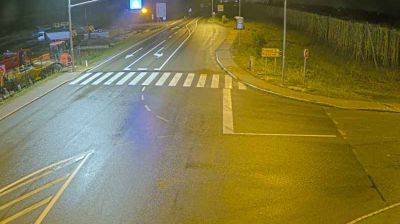


Trbovlje combines the close-knit character of a former mining town with the imposing scale of Zasavje industry, reflecting its position in the narrow valley of the Trboveljščica stream, a tributary of the Sava River. Coal mining shaped local life from the 19th century and remains central to the town’s identity. Its most recognisable landmark is the 360-metre chimney of the Trbovlje Power Station, the tallest structure in Slovenia, rising high above the valley floor. Steep, wooded hills keep the settlement compact while connecting it to the wider Sava corridor. Delavski dom Trbovlje, a long-established cultural centre, reflects the area’s strong workers’ traditions. Discover other points of interest through webcams located across Slovenia’s Zasavje region.
6 webcams
Slovenia occupies a meeting point of the Alps, the Pannonian Plain, the Dinaric mountains and the Adriatic coast in south-central Europe. The Julian Alps rise in the northwest, where Triglav is the country’s highest mountain, while the Soča River is known for its clear turquoise water. Karst terrain has shaped caves such as Postojna Cave and the Škocjan Caves, a UNESCO World Heritage site. Ljubljana combines a riverside old town with works by architect Jože Plečnik; farther east, wine-growing regions and thermal springs add another dimension. Slovenian food reflects Alpine, Mediterranean and Balkan influences. Find related webcams in the surrounding area to build a fuller picture of Slovenia and the northern Adriatic.
771 webcams