 Todtnau: Schwarzwald
The Wiese valley defines the setting of Todtnau — steep, forested Black Forest slopes give the town a compact form along the river corridor. This small town in Baden-Württemberg lies south of Feldberg, within the Southern Black Forest Nature Park, a region shaped by woodland, upland meadows and dispersed settlements. Todtnau is also associated with the 97-metre Todtnau Waterfall, where the Stübenbach drops over granite steps near the district of Aftersteg. The Wiese rises on Feldberg’s slopes and continues south through the valley toward Basel. Todtnau’s Bürstenmuseum preserves the local tradition of brush making.
Generated by AI
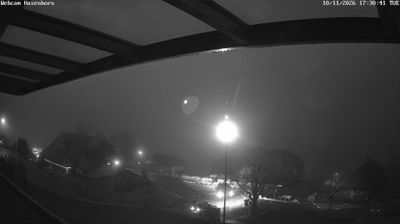
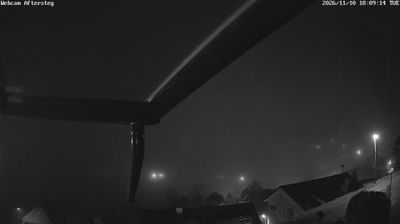
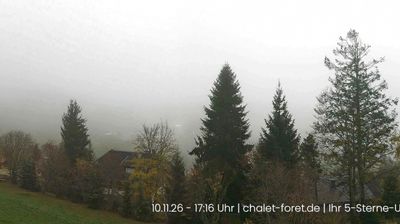


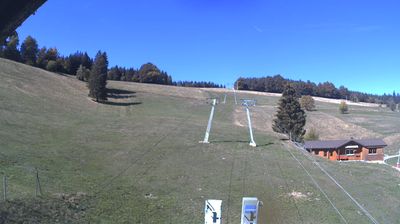


The landscape around Todtnau is steep and densely forested, which has shaped both the town’s compact form and its long association with forestry and mountain tourism. Set in the southern Black Forest, Todtnau follows the Wiese valley beneath the slopes of the Feldberg area. The 97-metre Todtnauer Wasserfall, fed by the Stübenbach, is among Germany’s highest natural waterfalls. Traditional brush and broom making also forms part of the town’s industrial heritage, remembered at the Todtnau Brush Museum. Explore further webcams across the southern Black Forest to broaden your impression of the Todtnau area.
11 webcams
Baden-Württemberg is best known within Germany for the Black Forest, the wooded upland region that shapes much of the state’s southwest. Its terrain also reaches from the Upper Rhine plain and its wine-growing areas to the limestone ridges of the Swabian Jura, while Lake Constance marks part of the southern frontier. Stuttgart, the state capital, is closely tied to the automobile industry and hosts the Mercedes-Benz Museum and Porsche Museum. Heidelberg’s old town and castle add another important strand to the region’s identity, alongside renowned universities, spas and regional cooking. Find related webcams in the surrounding area to build a fuller picture of Baden-Württemberg.
527 webcams
Germany stretches from the North Sea and Baltic Sea coasts to the Alps on its southern border, encompassing northern plains, river valleys and forested uplands. The Rhine, Danube and Elbe have long connected its regions, while the Black Forest and Bavarian Alps give the south a more dramatic relief. Berlin’s Brandenburg Gate and Museum Island reflect the capital’s role in German history and culture. Cologne Cathedral, a UNESCO World Heritage Site, rises above the Rhine, and the Bauhaus movement, founded in Weimar in 1919, transformed modern design far beyond Germany. Regional cooking, Christmas markets and brewing traditions bring further character to daily life. Browse additional webcams from the surrounding area to extend your view of Germany.
2.5K webcams