 Sulzbach-Rosenberg: An der Maxhütte
Few places in Bavaria have a history as closely tied to iron and steelmaking as Sulzbach-Rosenberg. The former Maxhütte works in the Rosenberg district were founded in 1853 and named for King Maximilian II of Bavaria; for generations, they made the town an important industrial centre of the Upper Palatinate. Production ended in 2002, but substantial parts of the works have been preserved as an industrial monument, including the blast-furnace plant. Factory structures meet the wooded ridges of the Franconian Jura around the town. Sulzbach-Rosenberg also retains an older urban core, with Sulzbach Castle above the historic centre.
Generated by AI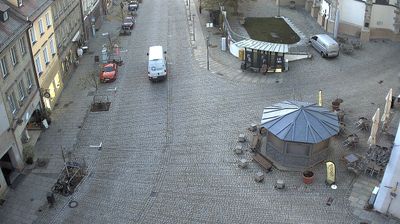

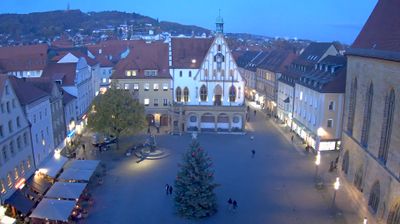


Sulzbach-Rosenberg straddles the Rosenbach in Bavaria’s Upper Palatinate, where its setting between the Franconian Jura and the Vils valley helped shape two neighbouring towns that were united in 1972. Sulzbach’s historic centre rises toward Sulzbach Castle, once associated with the Counts Palatine of Sulzbach, while Rosenberg developed around iron and steel production. The town also occupies an important place in Jewish cultural history: Sulzbach was a centre of Hebrew book printing in the 17th and 18th centuries. Forested uplands and a compact old core set it apart from nearby Nuremberg and Amberg. Explore nearby webcam locations that provide complementary perspectives on Sulzbach-Rosenberg and the Upper Palatinate.
3 webcams
Built around the early medieval Duchy of Bavaria, Bavaria grew into Germany’s largest federal state. The Danube crosses its broad centre, while the Bavarian Alps form its southern edge and include the Zugspitze, Germany’s highest mountain. Munich is the state capital and the home of Oktoberfest, a festival rooted in an 1810 royal wedding. Beyond the metropolis, Franconia’s vineyards, Swabian towns and Alpine resorts reveal how varied this part of Germany can be. Browse additional webcams from the surrounding area to extend your view of Bavaria.
652 webcams
Germany stretches from the North Sea and Baltic Sea coasts to the Alps on its southern border, encompassing northern plains, river valleys and forested uplands. The Rhine, Danube and Elbe have long connected its regions, while the Black Forest and Bavarian Alps give the south a more dramatic relief. Berlin’s Brandenburg Gate and Museum Island reflect the capital’s role in German history and culture. Cologne Cathedral, a UNESCO World Heritage Site, rises above the Rhine, and the Bauhaus movement, founded in Weimar in 1919, transformed modern design far beyond Germany. Regional cooking, Christmas markets and brewing traditions bring further character to daily life. Browse additional webcams from the surrounding area to extend your view of Germany.
2.3K webcams