 Strezhevoi
Strezhevoy occupies the right bank of the Ob River in northwestern Tomsk Oblast. Founded in 1966 to serve the development of nearby oil fields, it grew from a workers’ settlement into a town whose economy and identity remain closely tied to the petroleum industry. Broad streets, mid-rise apartment districts and extensive belts of mature trees give this remote West Siberian community an orderly, spacious character. Strezhevoy is one of the northernmost towns in Tomsk Oblast, set within the flat, forested lowlands of the Ob basin. An Orthodox church and civic amenities stand alongside housing built for an industrial town.
Generated by AI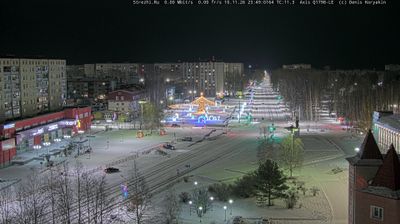
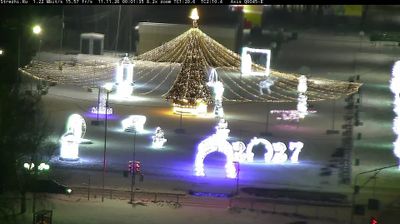
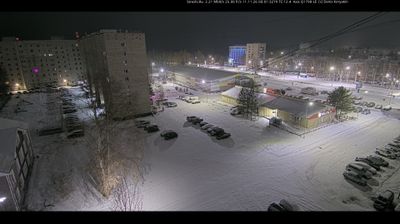

Strezhevoi has served as an oil-industry centre in northwestern Tomsk Oblast since the 1960s. It stands on the right bank of the Ob, deep in the West Siberian Plain and far from the region’s administrative capital, Tomsk. The settlement was founded in 1966 during the Soviet development of nearby petroleum fields and received town status in 1978. Oil production continues to shape local employment, infrastructure and the city’s purposeful layout. The Ob remains a defining presence here: a major Siberian waterway running through a vast lowland of forests, marshes and river channels. Continue through nearby webcams to explore different parts of Strezhevoi and the Ob River region.
4 webcams
The Ob River and its broad floodplain define much of Tomsk Oblast - waterways, taiga and wetlands have long shaped settlement, transport and resource industries. This vast section of the West Siberian Plain is marked by forests, marshes and numerous tributaries, with long winters central to its seasonal rhythm. Tomsk, the oblast capital, was founded in 1604 and is noted for its surviving wooden architecture and academic life, including Tomsk State University. Forestry and oil and gas production remain important to the regional economy. Browse additional webcams from the surrounding area to extend your view of Tomsk Oblast.
9 webcams
Russia has served as a major power between Europe and Asia since the 16th century. Its territory crosses eleven time zones, extending from the Baltic coast and the East European Plain over the Ural Mountains to the Pacific. The Volga, Europe’s longest river, runs through a core of historic Russian settlement, while Lake Baikal in Siberia is the world’s deepest lake. Moscow’s Kremlin and Red Square stand at the centre of the capital’s political and architectural heritage; Saint Petersburg’s Hermitage Museum occupies the Winter Palace. Orthodox churches, Russian-language literature, ballet and long-distance rail travel remain familiar reference points in a country of immense regional contrasts. Continue with other webcams from Russia to see how this part of northern Eurasia connects regionally.
460 webcams