 Sibenik: Šibenik - Šibensko-Kniniska, Croatia
Šibenik sits on Šibenik Bay on Croatia’s central Adriatic coast, where the Krka River reaches the sea. Its historic core climbs the slopes above a deeply indented harbour, while the waterfront remains an active part of a city long shaped by maritime trade. The Cathedral of St James, built during the 15th and 16th centuries entirely from stone, is Šibenik’s defining monument and a UNESCO World Heritage site. Venetian rule left a strong imprint on the old town, whose narrow lanes lead between stone houses, churches and squares. The bay is sheltered by islands and channels that connect the city to the wider Adriatic.
Generated by AI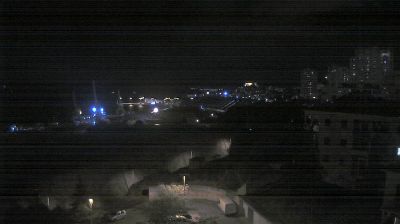
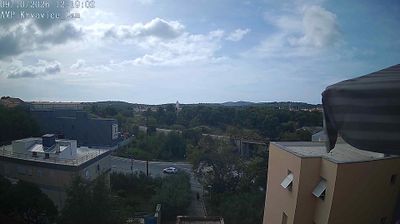
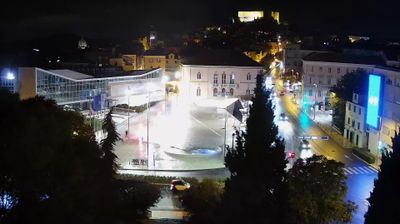
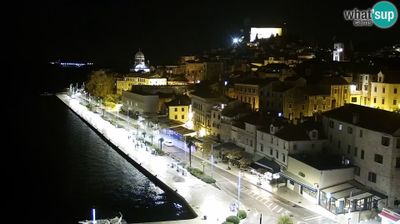



Šibenik straddles the gently rolling Bilogora uplands in Bjelovar-Bilogora County, where wooded ridges and cultivated fields have long shaped a dispersed rural settlement pattern. This is inland Croatia, far from the Adriatic city of the same name, in a farming region of small roads, hamlets and open horizons. Bilogora is a low, forested range extending across northern Croatia and gives the county much of its quiet, undulating character. Continue through nearby webcams to explore different parts of Bjelovar-Bilogora County.
3 webcams
Bjelovar-Bilogora County occupies a lowland-and-hill belt in central Croatia. Its terrain moves from the wooded slopes of the Bilogora range to farmland crossed by the Česma and Ilova rivers, giving the county a distinctly rural character. Bjelovar, the administrative centre, was established in 1756 as a planned military town under the Habsburg Monarchy, and its broad central streets still reflect that origin. Daruvar adds another layer to the area’s identity, known for thermal waters and a long Czech cultural presence. Find related webcams in the surrounding area to build a fuller picture of Bjelovar-Bilogora County.
8 webcams
Croatia occupies a long Adriatic coastline in southeastern Europe. Its shore is broken into islands and sheltered coves, while the Dinaric Alps rise inland and the Danube forms part of its eastern border. Dubrovnik’s fortified old city faces the sea, and Split grew around Diocletian’s Palace, a Roman complex begun in the early fourth century. Inland, Plitvice Lakes National Park is known for terraced lakes linked by waterfalls and has been a UNESCO World Heritage Site since 1979. Istrian olive groves, Zagreb and Slavonia’s vineyards reveal distinct regional identities. Explore nearby webcam locations that provide complementary perspectives on the Adriatic coast and Croatia’s interior.
360 webcams