 Schotten
Among the places of Hesse, Schotten stands out for its setting in the volcanic uplands of the Vogelsberg. The town lies near the headwaters of the Nidda, a river flowing through central Hesse before joining the Main. Forest, pasture and gently rolling open ground shape the surrounding countryside, while Schotten retains a compact historic core. The town is closely associated with the Vogelsberg, a broad volcanic upland whose basalt terrain has long influenced settlement and land use. Its location makes Schotten a useful base for exploring the highlands’ roads, woodland and small communities rather than a destination defined by a single urban landmark.
Generated by AI
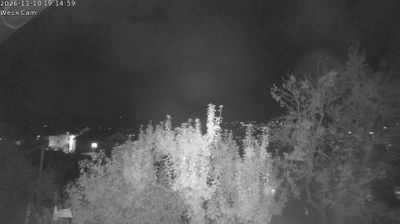


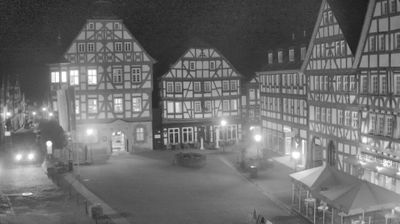

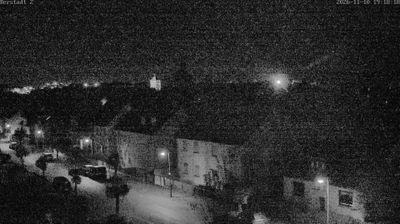
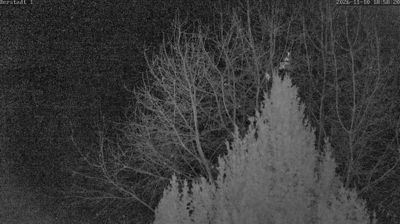
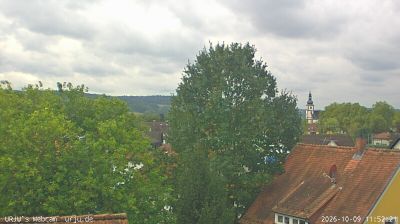

Schotten occupies the eastern slopes of the Vogelsberg volcanic upland in Hesse. The town stands in a region shaped by ancient volcanic activity, where wooded heights and open fields surround small settlements. Its compact historic centre retains half-timbered houses, while the Gothic Liebfrauenkirche is a defining landmark. Schotten also gives its name to the Schottenring, a long-established motorsport circuit and event associated with the town. The Vulkaneum visitor centre interprets the geology that formed the surrounding upland. Browse other webcams across Hesse and the Vogelsberg to place this setting in a wider geographic context.
2 webcams
Hesse has served as a cultural crossroads within central Germany since the Middle Ages. Its terrain runs from the wooded Taunus and Vogelsberg uplands to the Rhine and Main valleys, while the Lahn, Fulda and Eder shape other parts of the state. Frankfurt am Main provides a metropolitan counterpoint: its Römer city hall complex recalls a long civic tradition, and the Frankfurt Book Fair remains one of the world’s leading publishing events. Farther north, Kassel’s Bergpark Wilhelmshöhe is a UNESCO World Heritage site, noted for its designed landscape and monumental waterworks. Browse other webcams across Hesse to place this setting in a wider central German context.
148 webcams
Germany stretches from the North Sea and Baltic Sea coasts to the Alps on its southern border, encompassing northern plains, river valleys and forested uplands. The Rhine, Danube and Elbe have long connected its regions, while the Black Forest and Bavarian Alps give the south a more dramatic relief. Berlin’s Brandenburg Gate and Museum Island reflect the capital’s role in German history and culture. Cologne Cathedral, a UNESCO World Heritage Site, rises above the Rhine, and the Bauhaus movement, founded in Weimar in 1919, transformed modern design far beyond Germany. Regional cooking, Christmas markets and brewing traditions bring further character to daily life. Browse additional webcams from the surrounding area to extend your view of Germany.
2.8K webcams