 Schilpario
Built around the Passo di Venano crossing, Rifugio Nani Tagliaferri grew into a high-altitude stop in the upper Val di Vò above Schilpario, Lombardy. The refuge stands in the Orobie Alps, a rugged part of the Bergamasque Alps marked by steep grassy slopes, rock ridges and narrow mountain passes. It is a CAI mountain hut on hiking routes linking Rifugio Curò with Passo del Vivione. Rather than a settlement, this is a remote Alpine outpost whose role is defined by foot travel through the valleys and across the ridges. Its place on long-distance itineraries reflects the enduring culture of Italy’s staffed mountain refuges.
Generated by AI
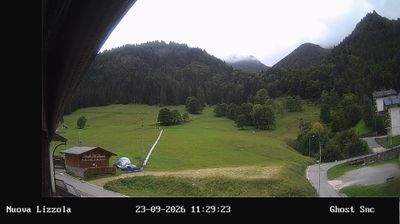
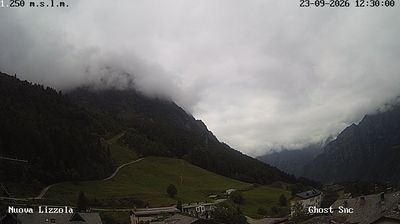
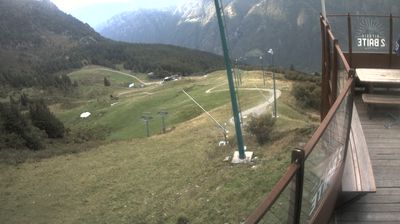
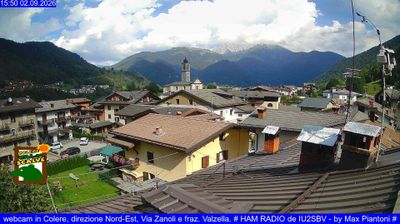
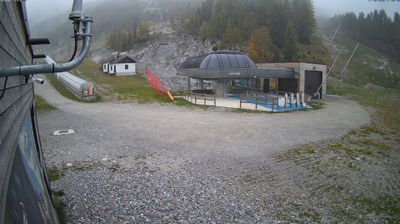
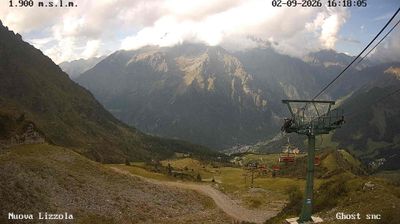
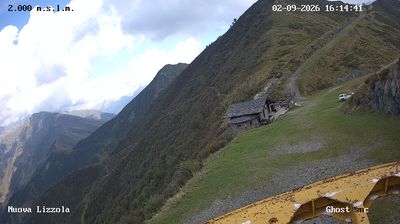
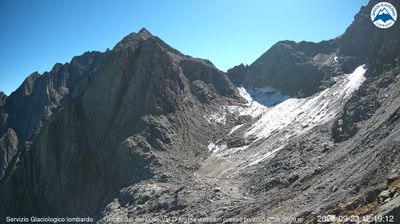

The terrain around Schilpario is a steep, forested Alpine valley in the Orobie Alps, which has shaped both the compact settlement and its long association with ironworking. Set in the upper Val di Scalve, the town is surrounded by mountain slopes and conifer woods rather than the broad plains commonly associated with Lombardy. The former Gaffione iron mine recalls the extraction activity that once supported the local economy. Schilpario is also known as a winter base for cross-country skiing. Move on to other webcams in Lombardy to compare Alpine valleys and settings around Val di Scalve.
1 webcam
Shaped by the Po Valley and the southern Alps, Lombardy developed into Italy’s leading economic region. Its territory runs from high Alpine valleys to the broad Po plain, where the Adda, Oglio and Ticino are major waterways. Milan is its metropolitan centre, marked by the Gothic Duomo and a long role in finance, design and publishing. Farther east, Bergamo is divided between its walled Città Alta and modern lower city; nearby Lake Iseo lies between Lombardy’s pre-Alpine ridges. Rice fields around Pavia, vineyards in Franciacorta and lake towns give the region a markedly varied identity. Browse other webcams across Lombardy to place this setting in a wider geographic context.
301 webcams
Among the countries of southern Europe, Italy stands out for its Mediterranean coastline and cities marked by the legacy of ancient Rome. The Alps form its northern frontier, while the Apennines run down the peninsula and the Po crosses the broad plain of the north. Rome’s Colosseum and Roman Forum recall the ancient empire; Florence is closely associated with the Renaissance, and Venice is built across a lagoon on the Adriatic. Food changes markedly between regions, from olive-oil cooking in the south to rice dishes in the Po Valley. Sicily and Sardinia add distinct island identities to a country whose regions retain strong local character. Explore nearby webcam locations that provide complementary perspectives on Italy’s coasts, cities and mountains.
3K webcams