 Sappada: Ristorante Mondschein

Sappada sits in the upper Piave Valley in Friuli-Venezia Giulia, Italy, where a dispersed settlement lies between wooded slopes and the Carnic Alps. The Piave, one of north-eastern Italy’s major rivers, rises in this mountain area near the Austrian border. Sappada is formed of small hamlets rather than a single compact centre, with meadows, timber houses and mountain roads threaded through the valley. Its culture retains a distinctive Germanic linguistic heritage: alongside Italian, the local Plodar dialect belongs to the Bavarian language group. The village is also known for traditional wooden architecture and carnival figures such as Rollate, whose masked processions are part of local custom. Hiking, cycling and winter sports link everyday village life to the surrounding alpine terrain.
Generated by AI
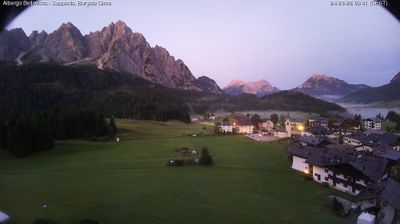

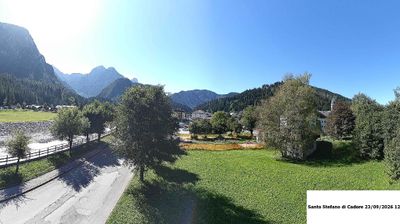
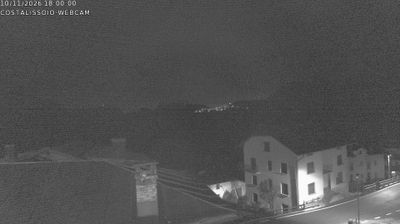


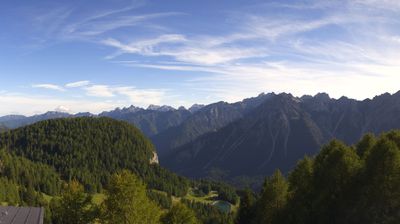

Sappada lies along the upper Piave River in the Carnic Alps of Friuli-Venezia Giulia, and its high-valley position has helped preserve a character distinct from the region’s Adriatic-facing towns. The settlement is formed by hamlets, where timber houses and steep-roofed Alpine buildings remain part of the streetscape. Sappada is also known as Plodn, reflecting its historic German-speaking community and the local Plodar dialect, which belongs to the Bavarian language group. Routes lead towards Monte Peralba, near the Piave’s source, while winter sports and summer walks are central to local life. Browse other webcams across Friuli-Venezia Giulia and the Carnic Alps to place this setting in a wider geographic context.
3 webcams
Friuli-Venezia Giulia is best known within Italy for terrain that runs from the Julian Alps across the Friulian plain to the Adriatic. Bordering Austria and Slovenia in Italy’s northeast, it has long brought together Italian, Friulian, Slovenian and German-speaking communities. The Tagliamento flows through Friuli toward the sea, while the limestone Carso plateau rises behind Trieste. Aquileia preserves important Roman archaeological remains and an early Christian basilica; Trieste, meanwhile, developed under Habsburg rule into a major port. Browse other webcams across Friuli-Venezia Giulia to place this borderland in a wider Italian and Central European context.
96 webcams
Among the countries of southern Europe, Italy stands out for its Mediterranean coastline and cities marked by the legacy of ancient Rome. The Alps form its northern frontier, while the Apennines run down the peninsula and the Po crosses the broad plain of the north. Rome’s Colosseum and Roman Forum recall the ancient empire; Florence is closely associated with the Renaissance, and Venice is built across a lagoon on the Adriatic. Food changes markedly between regions, from olive-oil cooking in the south to rice dishes in the Po Valley. Sicily and Sardinia add distinct island identities to a country whose regions retain strong local character. Explore nearby webcam locations that provide complementary perspectives on Italy’s coasts, cities and mountains.
3.1K webcams