 Rosporden
Few places in Brittany have a history as closely tied to their ponds as Rosporden. This Finistère town developed around the Étang de Rosporden, whose broad water surface gives the centre an unusually open layout for inland western Brittany. Footpaths follow the shore, while homes and a church spire mark the built-up edge. Rosporden is known as the town of three ponds, an identity rooted in the water bodies that shape its neighbourhoods. Set between Quimper and Concarneau, it provides a quieter, distinctly Breton counterpoint to the nearby Atlantic coast.
Generated by AI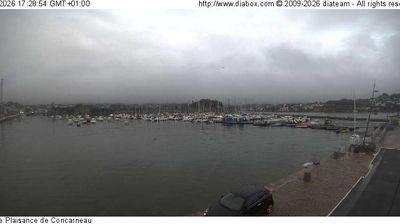
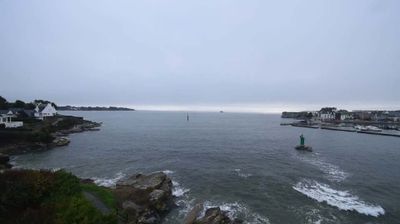



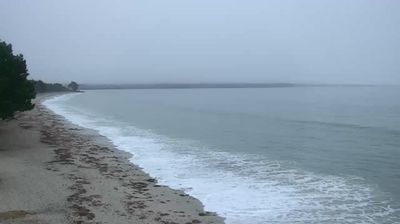



Rosporden combines the calm of an inland waterside town with the everyday energy of a Breton service centre, a contrast that reflects its position in southern Finistère. The Étang de Rosporden borders the centre, creating an unusually open expanse of water amid streets, shops and homes. Often called the town of ponds, Rosporden draws part of its identity from smaller étangs and waterside paths. The Church of Notre-Dame marks the older core, while the town’s railway station connects it with Quimper and western France. Continue to other webcams in Brittany to compare coastal and inland settings around Rosporden.
1 webcam
Brittany has served as a cultural crossroads within northwestern France since the medieval era. Occupying a broad peninsula between the English Channel and the Atlantic Ocean, it is shaped by the ancient Armorican Massif, a terrain of granite uplands, farmland and deeply indented shores. The region retains a strong Breton identity alongside its French character; the Breton language, related to the Celtic languages of Britain, is still taught and heard in parts of the region. Prehistoric monuments are another enduring marker, with the Carnac stones among Europe’s most important megalithic sites. Port cities, fishing traditions and maritime foodways give the coast a distinct place in French life. Browse additional webcams from the surrounding area to extend your view of Brittany.
171 webcams
The Atlantic and Mediterranean coastlines, together with the Alps, Pyrenees and broad river basins, define much of France — they support maritime trade, farming, wine regions and travel throughout the year. The Seine runs through Paris, where the Eiffel Tower and the Louvre are among Europe’s most recognised landmarks. The Loire Valley is known for Renaissance châteaux, while Mont-Saint-Michel rises from a tidal bay in Normandy. Regional food traditions are equally distinctive, from Breton seafood to Provençal cooking, with bread, cheese and wine central to everyday life. France’s global cultural influence is evident in its language, literature, fashion and cinema. View additional webcams nearby to better understand how France’s coasts, plains and mountain borders relate to their surroundings.
2.2K webcams