 Reit im Winkl
Winklmoos-Alm lies in a high valley of the Chiemgau Alps, where forested ridges rise around open pastureland close to Germany’s border with Austria. This upland area belongs to the municipality of Reit im Winkl and retains the working character of an Alpine pasture, with meadows, farm buildings and access roads spread across the slopes. Its terrain connects with the Steinplatte area on the Austrian side of the border, placing it within a wider mountain region shared by Bavaria and Tyrol. Reit im Winkl is a well-established mountain resort, yet the Winklmoos-Alm remains defined by traditional alpine farming and the spacious, settled character of its high pastures.
Generated by AI




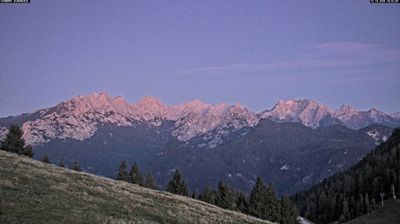
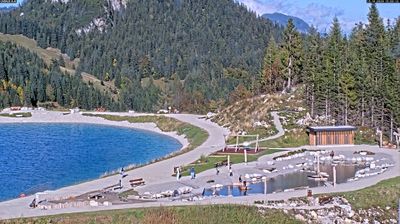


Reit im Winkl lies in a high valley of the Chiemgau Alps, where wooded slopes and alpine meadows surround this Bavarian settlement close to Austria. At about 695 metres above sea level, the village is a recognised base for cross-country skiing in winter and for walking routes once the snow has gone. The Winklmoos-Alm above the settlement is a traditional mountain pasture and an important link to the Steinplatte area on the Bavarian-Tyrolean border. In the centre, the Catholic parish church of St Pankratius reflects a community long shaped by alpine farming and travel through the mountains. Explore nearby webcam locations that provide complementary perspectives on Reit im Winkl and the Chiemgau Alps.
3 webcams
Built around the early medieval Duchy of Bavaria, Bavaria grew into Germany’s largest federal state. The Danube crosses its broad centre, while the Bavarian Alps form its southern edge and include the Zugspitze, Germany’s highest mountain. Munich is the state capital and the home of Oktoberfest, a festival rooted in an 1810 royal wedding. Beyond the metropolis, Franconia’s vineyards, Swabian towns and Alpine resorts reveal how varied this part of Germany can be. Browse additional webcams from the surrounding area to extend your view of Bavaria.
754 webcams
Germany stretches from the North Sea and Baltic Sea coasts to the Alps on its southern border, encompassing northern plains, river valleys and forested uplands. The Rhine, Danube and Elbe have long connected its regions, while the Black Forest and Bavarian Alps give the south a more dramatic relief. Berlin’s Brandenburg Gate and Museum Island reflect the capital’s role in German history and culture. Cologne Cathedral, a UNESCO World Heritage Site, rises above the Rhine, and the Bauhaus movement, founded in Weimar in 1919, transformed modern design far beyond Germany. Regional cooking, Christmas markets and brewing traditions bring further character to daily life. Browse additional webcams from the surrounding area to extend your view of Germany.
2.5K webcams