 Randazzo: Nebrodi
Randazzo is best known within Sicily for its medieval centre, built largely from dark lava stone from Mount Etna. The town stands where Etna’s northern flank, the Nebrodi Mountains and the Alcantara valley meet, giving it a distinctly upland character for eastern Sicily. Its old streets retain churches, gateways and civic buildings made with local volcanic material, while orchards, vineyards and woodland shape the surrounding countryside. North of Randazzo, the Nebrodi extend toward the Tyrrhenian Sea, with extensive forest and pasture land. Randazzo is also a practical starting point for exploring eastern Sicily’s volcanic and mountain landscapes.
Generated by AI
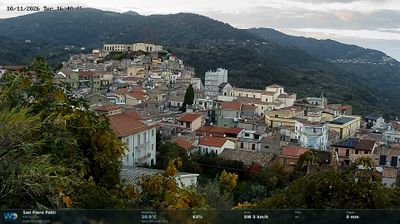

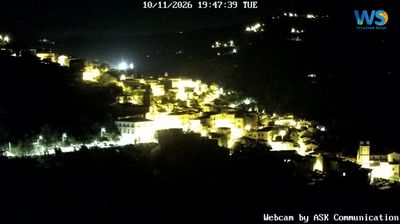


Randazzo lies in the upper Alcantara Valley, where the northern slopes of Mount Etna meet the wooded foothills of the Nebrodi Mountains. The Alcantara flows east from this upland setting toward the Ionian Sea. The historic core retains a dense fabric of dark lava-stone buildings, reflecting the town’s close relationship with Etna. The Basilica di Santa Maria, noted for its Gothic portal, joins San Martino and San Nicola among the principal medieval churches of the old town. Randazzo developed as an important medieval centre on routes connecting Etna, the Nebrodi and eastern Sicily. Browse other webcams across Sicily to place Randazzo in a wider geographic context.
2 webcams
Sicily stretches from the Strait of Messina to Capo Passero, encompassing volcanic highlands, fertile plains and long Mediterranean coasts. Mount Etna, Europe’s highest active volcano, dominates the east, while the island’s interior is marked by cultivated land and hill towns. Off the northern coast lie the volcanic Aeolian Islands. Palermo’s Arab-Norman monuments reflect centuries of Mediterranean exchange, and Agrigento’s Valley of the Temples preserves major remains of the Greek world. Browse additional webcams from the surrounding area to extend your view of Sicily.
106 webcams
Among the countries of southern Europe, Italy stands out for its Mediterranean coastline and cities marked by the legacy of ancient Rome. The Alps form its northern frontier, while the Apennines run down the peninsula and the Po crosses the broad plain of the north. Rome’s Colosseum and Roman Forum recall the ancient empire; Florence is closely associated with the Renaissance, and Venice is built across a lagoon on the Adriatic. Food changes markedly between regions, from olive-oil cooking in the south to rice dishes in the Po Valley. Sicily and Sardinia add distinct island identities to a country whose regions retain strong local character. Explore nearby webcam locations that provide complementary perspectives on Italy’s coasts, cities and mountains.
3K webcams