 Queralbs
Few places in Catalonia have a history as closely tied to mountain pilgrimage and the rack railway as Vall de Núria. Set high in the eastern Pyrenees within Queralbs municipality, this isolated valley centres on the Sanctuary of Our Lady of Núria, a longstanding destination of Catalan devotion. The Núria rack railway, opened in 1931, connects the valley with Ribes de Freser and remains its main transport link, as no public road reaches the site. Around the station and sanctuary, a compact mountain complex serves walkers, skiers and families, with steep wooded slopes rising towards the surrounding Pyrenean ridges. Vall de Núria also has political importance: the draft Statute of Autonomy of Catalonia was prepared here in 1931.
Generated by AI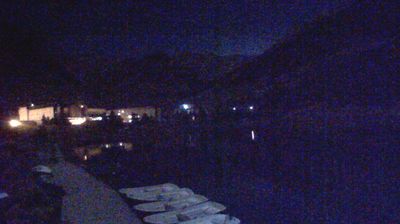
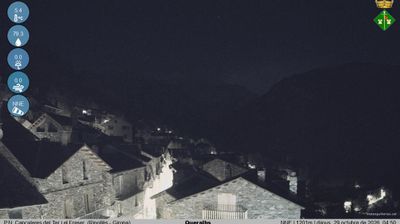
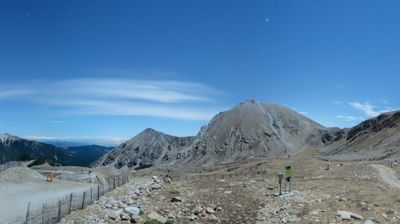
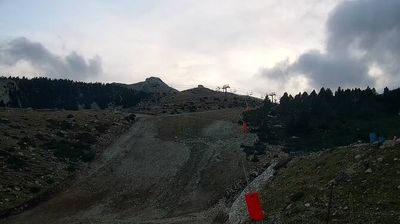




Queralbs has served as a mountain settlement in the Catalan Pyrenees since the Middle Ages. Above the Ribes Valley, it stands on the route to Vall de Núria, a high Pyrenean valley reached by the Núria Rack Railway; Queralbs is the last settlement accessible by road. Stone houses and steep lanes reflect generations of life in this rugged upland setting. The Romanesque church of Sant Jaume, notable for its carved portico, is the village’s principal historic monument. Trails lead into the surrounding mountains, while nearby Ribes de Freser provides important rail and road links. Browse additional webcams from the Ribes Valley and Catalan Pyrenees to extend your view of Queralbs.
3 webcams
Catalonia combines Mediterranean ease with rugged inland terrain in a way that reflects its position between the Pyrenees and Spain’s eastern coast. In northeastern Spain, the region extends from the coves of the Costa Brava to high mountain valleys and the Ebro Delta. Barcelona is its largest city and cultural reference point, known for Antoni Gaudí’s still-unfinished Sagrada Família. Inland, the serrated massif of Montserrat rises near Catalonia’s geographic centre and is home to the Benedictine monastery of Santa Maria de Montserrat. Catalan is co-official with Spanish, and the region’s language, cuisine and traditions give everyday life a distinct identity. Discover how Catalonia connects with the Pyrenees, coast and neighbouring regions by browsing webcams nearby.
270 webcams
Spain extends from the Cantabrian coast to the Canary Islands, encompassing Atlantic shores, Mediterranean beaches and the broad interior Meseta. The Pyrenees form its northeastern frontier, while the Guadalquivir crosses Andalusia on its way to the Atlantic. Madrid anchors the country’s political and cultural life, but distinct regional identities are central to Spain’s character: Catalonia, the Basque Country, Galicia and Andalusia each have their own languages or strong local traditions. Granada’s Alhambra is a major monument of the medieval Nasrid dynasty, and Santiago de Compostela remains the destination of the Camino de Santiago. Browse related webcams around the Iberian Peninsula to build a fuller picture of Spain.
1.4K webcams