 Pyhajoki: Tie 8 - Hanhikivi - Ouluun
Pyhäjoki lies along the Gulf of Bothnia coast, where the low, forested plains of North Ostrobothnia meet the shallow Baltic shore. The Pyhäjoki River enters the sea at the municipal centre, while Hanhikivi forms a notable coastal headland to the northwest. Road 8, part of Finland’s national road network, crosses the municipality and links its scattered settlements with larger towns along the western coast. Woodland, fields and a sparsely settled shoreline shape the area more than urban density. Pyhäjoki’s 18th-century wooden church reflects the long-established parish community here. Hanhikivi takes its name from a large glacial erratic that served as a boundary marker for centuries.
Generated by AI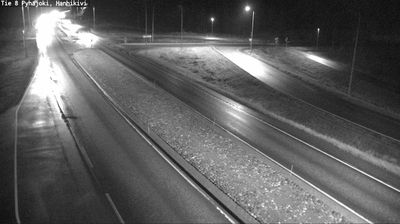
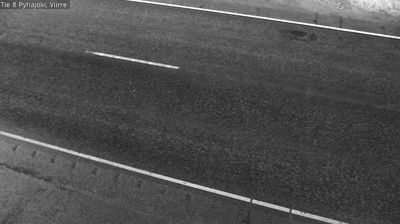
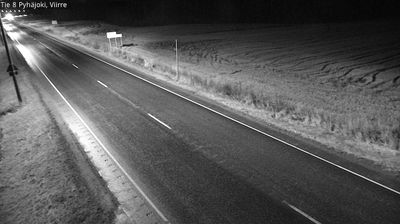
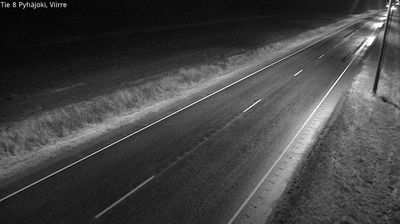
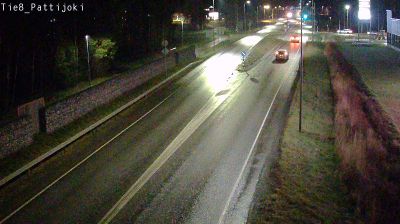
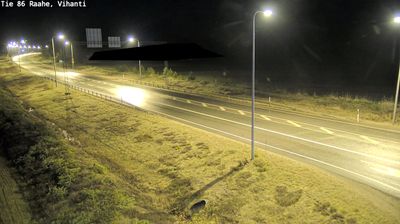
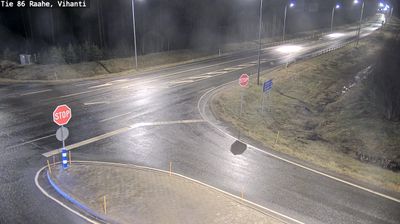
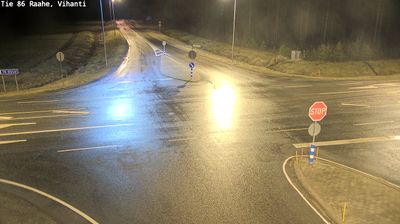

The landscape around Pyhäjoki is a low coastal plain cut by the Pyhäjoki River beside the Gulf of Bothnia, which has shaped both the settlement pattern and local economy. The municipality centres on the river’s mouth, where the waterway meets Finland’s western seaboard; farming, fishing and coastal connections have long mattered here. Pyhäjoki’s wooden church, completed in 1756, remains a focal point of the parish. On the coast, the Hanhikivi headland is known for its namesake glacial erratic, long used as a boundary stone. Discover other points of interest through webcams located across Finland’s Gulf of Bothnia coast.
5 webcams
North Ostrobothnia stretches from the Gulf of Bothnia coast to forested uplands near Finland’s eastern border, encompassing low river plains, peatlands and northern boreal wilderness. The Oulujoki flows through the regional capital, Oulu, before reaching the sea; the city was founded in 1605 and remains an important centre for northern Finland. Inland, Kuusamo and the Ruka area bring a more rugged character, with extensive forests and a strong winter-sports tradition. Along the coast, open horizons and changing Baltic conditions shape daily life. Discover other points of interest through webcams located across North Ostrobothnia.
259 webcams
The terrain of Finland ranges from low coastal plains along the Gulf of Bothnia to fells in Lapland, creating a country of forests, lakes and long northern distances. More than 180,000 lakes shape everyday life, while the Lakeland region is threaded with waterways and islands. Helsinki, on the Gulf of Finland, combines neoclassical landmarks around Senate Square with contemporary Finnish design. Farther north, the Sámi are Finland’s only recognised Indigenous people, and their culture remains closely connected to the Arctic region. In winter, snow and ice transform the north; in summer, long daylight extends outdoor life well into the evening. Continue through nearby webcams to explore different parts of Finland.
1.7K webcams