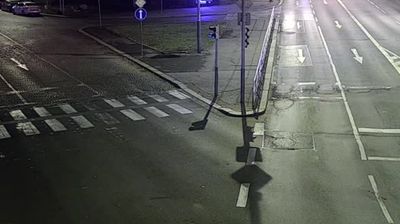
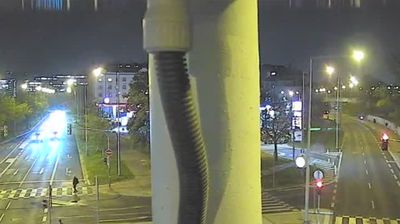
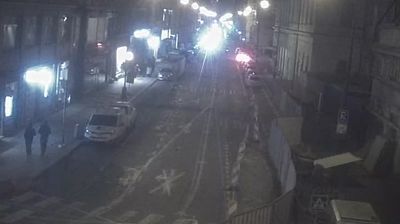
 Prague: TSK-Ohrada (Koněvova-Želivského)
The Vltava River defines the setting of Prague — its valley gathers historic districts and later urban quarters between the rolling hills of Bohemia. Czechia’s capital developed as separate medieval towns on both banks before they were united in 1784. Charles Bridge has connected the Old Town with Malá Strana since the 15th century, and Prague Castle stands on the Hradčany ridge above the river. The Historic Centre of Prague has been a UNESCO World Heritage Site since 1992. Beyond that core, dense blocks, broad streets and an extensive tram system underline Prague’s role as the country’s political, cultural and transport centre. Gothic, Baroque, Art Nouveau and 20th-century architecture all have a place in its streets.
Generated by AI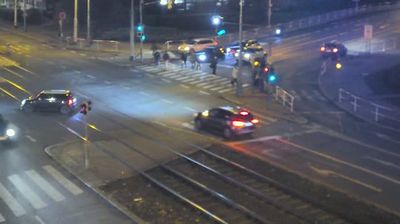




Tucked along the bends of the Vltava River in the heart of Bohemia, Prague is a city whose character is shaped by its riverbanks and hilltop districts. Prague Castle rises above the left bank, while the medieval Charles Bridge, completed in 1402, connects Malá Strana with the Old Town. Gothic, Baroque and Art Nouveau buildings share the centre with busy squares, theatres and cafés, reflecting Prague’s long role as the Czech capital. The Old Town Astronomical Clock, installed in 1410, remains one of its defining public landmarks. Discover how Prague belongs to the wider Bohemian setting by browsing webcams in the surrounding area.
131 webcams
Built around crossings of the Vltava River, Hlavní město Praha grew into Czechia’s capital and largest city. Its historic core on both banks of the river brings together the medieval Charles Bridge, Old Town Square and Prague Castle, whose origins date to the 9th century. The city centre has been a UNESCO World Heritage Site since 1992. Beyond its major monuments, Prague is a living European capital of distinct neighbourhoods, parks, universities and cafés, with tram lines linking riverfront districts to the surrounding hills. Czech, Jewish and Central European traditions remain visible in its streets and architecture. Continue through nearby webcams to explore different parts of Prague.
131 webcams
The terrain of Czechia ranges from fertile lowlands in southern Moravia to mountain ridges along the northern frontier, giving this Central European country a distinctly varied geography. The Vltava runs through Prague before joining the Elbe, while the Krkonoše form part of the border with Poland and include Sněžka, Czechia’s highest mountain. Prague’s historic centre, with Prague Castle and Charles Bridge, reflects the city’s long role as a political and cultural centre. Beyond the capital, Bohemia is known for spa towns and brewing, and Moravia for wine-growing traditions. View additional webcams nearby to better understand how Czechia relates to its Central European surroundings.
1.4K webcams