 Pozega: Kalvarija: Požega, Tekija
Požega straddles the Orljava River in Croatia’s Požega Valley, a sheltered Slavonian basin whose fertile ground has made the town a regional centre for trade and administration. Papuk and Krndija rise to the north and east, while Psunj and Požeška Gora enclose other sides of the valley, giving the urban area a distinctly contained setting. Its old centre retains the Gothic Church of St Lawrence, while the Cathedral of St Teresa of Avila reflects the Baroque rebuilding that shaped much of central Požega. Vineyards and farmland remain integral to the surrounding lowland, linking the town to Slavonia’s long-established agricultural traditions.
Generated by AI
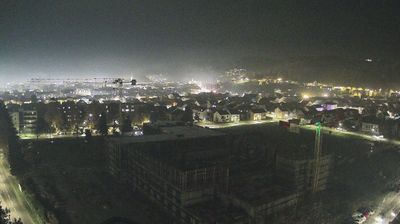




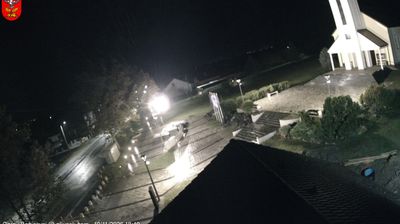


Požega is best known in Croatia for its Baroque centre around Holy Trinity Square. Set in the fertile Požega Valley, the city lies near the Orljava River and is enclosed by the wooded slopes of Papuk, Psunj and Požeška gora. Its streets retain a notably coherent 18th-century character, with the Cathedral of St Teresa of Avila and the Holy Trinity column among the principal landmarks. Each March, the Grgurevo celebration uses cannon fire to recall the end of Ottoman rule in 1688. Browse other webcams across Požega-Slavonia County to place this setting in a wider geographic context.
3 webcams
Požega-Slavonia County occupies the Požega Valley in eastern Croatia. Encircled by the wooded slopes of Papuk, Psunj, Krndija and Požeška Gora, it is one of Slavonia’s distinctly inland regions, with fertile fields and vineyards set between low mountain ranges. The county seat, Požega, is a long-established regional town whose baroque core includes the Cathedral of St Teresa of Ávila. Wine is central to local identity, particularly around Kutjevo, an important Slavonian wine-growing centre. Continue with other webcams from the area to see how this part of Slavonia connects regionally.
7 webcams
Croatia occupies a long Adriatic coastline in southeastern Europe. Its shore is broken into islands and sheltered coves, while the Dinaric Alps rise inland and the Danube forms part of its eastern border. Dubrovnik’s fortified old city faces the sea, and Split grew around Diocletian’s Palace, a Roman complex begun in the early fourth century. Inland, Plitvice Lakes National Park is known for terraced lakes linked by waterfalls and has been a UNESCO World Heritage Site since 1979. Istrian olive groves, Zagreb and Slavonia’s vineyards reveal distinct regional identities. Explore nearby webcam locations that provide complementary perspectives on the Adriatic coast and Croatia’s interior.
381 webcams