 Orleans
Among the places of Centre-Loire Valley, Orléans stands out for its enduring link with Joan of Arc and the Loire. The city stands on the north bank of France’s longest river, at a historic crossing between Paris and the southwest. Its centre combines medieval street patterns with major rebuilding of the eighteenth and nineteenth centuries. Near Place de l’Étape, the Renaissance Hôtel Groslot was commissioned by Jacques Groslot in the 16th century and later became the town hall. Joan of Arc entered Orléans in 1429 during the siege; the city marks her role each spring with the Fêtes de Jeanne d’Arc. The Loire’s broad course, embankments and bridges give Orléans an open riverside identity, while civic squares and formal façades underline its role as a regional capital.
Generated by AI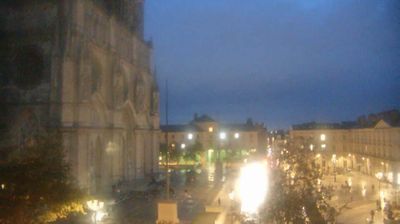
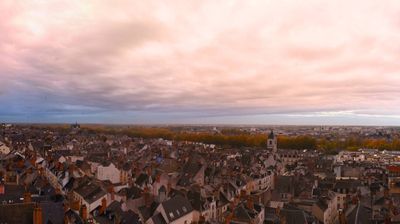
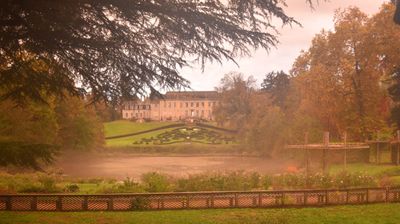



Orléans combines a tranquil Loire-side setting with a defining role in France’s national story, reflecting its position in the Centre-Loire Valley. The Loire shapes the city’s long, low riverbanks and broad horizon, while streets behind them lead toward Sainte-Croix Cathedral and the old centre. In 1429, Joan of Arc arrived during the English siege; its subsequent lifting remains central to the city’s identity. Each spring, the Fêtes johanniques commemorate those events with processions and ceremonies. Orléans is also a useful base for following the Loire Valley’s river towns and châteaux. Explore nearby webcam locations that provide complementary perspectives on Orléans and the Loire Valley.
5 webcams
Among the regions of France, Centre-Loire Valley stands out for its concentration of Renaissance royal residences along the Loire River. The area around Blois and Chambord lies in a broad river plain of woods, farmland and vineyards, while the Loire remains the region’s defining waterway. Château de Chambord, commissioned by King Francis I in the 16th century, is renowned for its vast scale and distinctive French Renaissance design. Blois, once a seat of the French court, adds another important royal chapter. Part of the Loire Valley is listed as a UNESCO World Heritage site. Explore additional webcams nearby to see how Centre-Loire Valley connects with the Loire basin and surrounding countryside.
35 webcams
The Atlantic and Mediterranean coastlines, together with the Alps, Pyrenees and broad river basins, define much of France — they support maritime trade, farming, wine regions and travel throughout the year. The Seine runs through Paris, where the Eiffel Tower and the Louvre are among Europe’s most recognised landmarks. The Loire Valley is known for Renaissance châteaux, while Mont-Saint-Michel rises from a tidal bay in Normandy. Regional food traditions are equally distinctive, from Breton seafood to Provençal cooking, with bread, cheese and wine central to everyday life. France’s global cultural influence is evident in its language, literature, fashion and cinema. View additional webcams nearby to better understand how France’s coasts, plains and mountain borders relate to their surroundings.
2.2K webcams