 Novouralsk
Tucked into the eastern foothills of the Middle Urals, Novouralsk is a place whose character is shaped by its position on the range’s eastern side. The settlement was founded in 1941 and later became home to the Ural Electrochemical Combine, an enterprise of the Soviet nuclear industry; for decades it was known by the coded name Sverdlovsk-44. Novouralsk remains a closed city, with access regulated because of its nuclear facilities. Broad streets and apartment districts reflect the ordered layout of a Soviet-built industrial centre, while the surrounding Ural ridges place it in the forest belt between European Russia and Siberia.
Generated by AI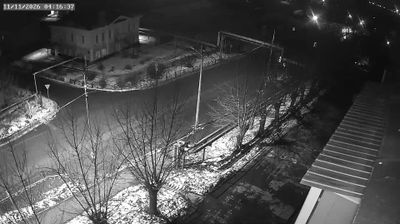
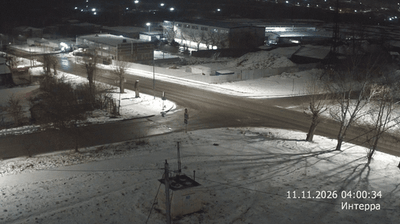

Among the cities of Sverdlovsk Oblast, Novouralsk stands out as a closed city shaped by Russia’s nuclear industry. It lies on the eastern side of the Middle Urals, amid wooded ridges and lakes in the transition zone between Europe and Siberia. Founded during the Soviet era as Sverdlovsk-44, the settlement developed around the Ural Electrochemical Combine, a uranium-enrichment enterprise central to its identity. Novouralsk remains a closed administrative territory, with regulated entry; its planned Soviet-era districts and civic life evolved under that special status. Move on to other webcams in Sverdlovsk Oblast to compare landscapes and settings around the Middle Urals.
1 webcam
The Ural Mountains define much of Sverdlovsk Oblast - forests and mineral deposits have long shaped its settlements and heavy industry. On the eastern slopes, broad river valleys lead towards the West Siberian Plain, and the Tura flows north through the wider Ob basin. Yekaterinburg, the oblast capital, began in 1723 as an ironworks settlement on the Iset River; it remains a major cultural and industrial centre of the Urals. The region also crosses the conventional boundary between Europe and Asia, marked at several points along the Ural corridor. Continue through nearby webcams to explore different parts of Sverdlovsk Oblast.
6 webcams
Russia has served as a major power between Europe and Asia since the 16th century. Its territory crosses eleven time zones, extending from the Baltic coast and the East European Plain over the Ural Mountains to the Pacific. The Volga, Europe’s longest river, runs through a core of historic Russian settlement, while Lake Baikal in Siberia is the world’s deepest lake. Moscow’s Kremlin and Red Square stand at the centre of the capital’s political and architectural heritage; Saint Petersburg’s Hermitage Museum occupies the Winter Palace. Orthodox churches, Russian-language literature, ballet and long-distance rail travel remain familiar reference points in a country of immense regional contrasts. Continue with other webcams from Russia to see how this part of northern Eurasia connects regionally.
460 webcams