 Myski
Tsentralnoye Rural Settlement combines a calm civic landscape with the industrial identity of Kuzbass in a way that reflects its position in the Kuznetsk Basin. Kemerovo Oblast–Kuzbass lies in one of Russia’s major coal-bearing regions, and the widely used name Kuzbass is derived from the basin itself. Here, paved footpaths cross lawns with benches, planted trees and open communal ground. The low-density setting differs markedly from a dense urban centre, while still belonging to a region whose modern economy has long been tied to mining and industry. Mature conifers and broad grassy areas give the grounds a measured park character, with space designed for everyday walks and local gatherings.
Generated by AI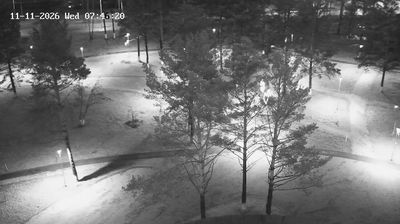
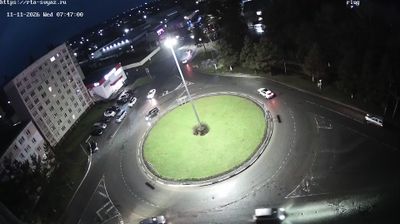
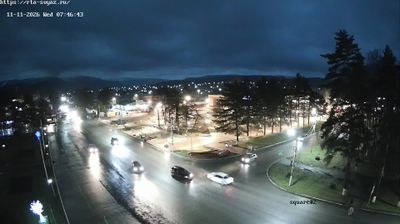


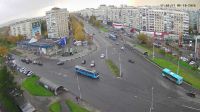
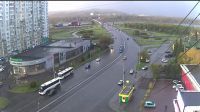
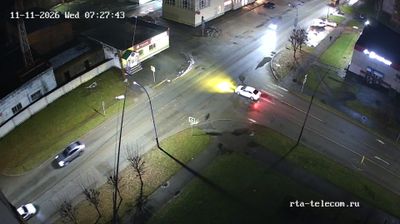
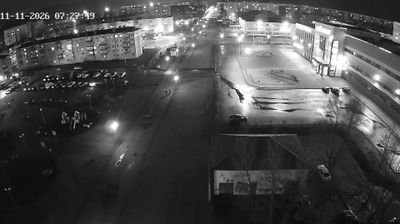

Myski is best known within Kemerovo Oblast–Kuzbass as a centre of Shor culture. The city stands where the Mras-Su joins the Tom, on the northern edge of Mountain Shoria, a taiga and mountain region long associated with the Shor, one of Siberia’s Indigenous Turkic peoples. River valleys and wooded hills meet a coal-producing region shaped by mining and power generation. The Tom-Usinskaya power station is a major industrial landmark, while Shor traditions give the area a distinct cultural identity. Myski received town status in 1956. See how Myski fits into southern Kuzbass by browsing webcams nearby.
4 webcams
Among Russia’s regions, Kemerovo Oblast–Kuzbass stands out as the core of the Kuznetsk Coal Basin, one of the country’s principal coal-producing areas. Set in southwestern Siberia, it combines industrial cities with taiga, river valleys and uplands framed by the Kuznetsk Alatau and the Salair Ridge. The Tom River runs through Novokuznetsk, the oblast’s largest city, where the Kuznetsk Fortress recalls the area’s earlier Siberian frontier history. Mining remains central to local identity, while the surrounding terrain brings a markedly different scale beyond the urban centres. Trace Kemerovo Oblast–Kuzbass’s place in southwestern Siberia by browsing webcams in the surrounding area.
67 webcams
Russia has served as a major power between Europe and Asia since the 16th century. Its territory crosses eleven time zones, extending from the Baltic coast and the East European Plain over the Ural Mountains to the Pacific. The Volga, Europe’s longest river, runs through a core of historic Russian settlement, while Lake Baikal in Siberia is the world’s deepest lake. Moscow’s Kremlin and Red Square stand at the centre of the capital’s political and architectural heritage; Saint Petersburg’s Hermitage Museum occupies the Winter Palace. Orthodox churches, Russian-language literature, ballet and long-distance rail travel remain familiar reference points in a country of immense regional contrasts. Continue with other webcams from Russia to see how this part of northern Eurasia connects regionally.
458 webcams