 Mykines: Mykines Hólmur Lighthouse
Across the Faroe Islands, few places have a past as intimately connected with Atlantic navigation as Mykines. At the island’s western edge, Mykines Hólmur is linked to the main island by a footbridge spanning a narrow cleft. Mykines Hólmur Lighthouse, built in 1909, stands above the North Atlantic and marks the Faroes’ western approaches. The route towards it crosses seabird breeding ground; Mykines is particularly associated with Atlantic puffins and northern gannets. Settlement here has long depended on the sea, while grass-roofed houses reflect a building tradition found across the archipelago. West of Mykines lies open ocean rather than another Faroese island.
Generated by AI
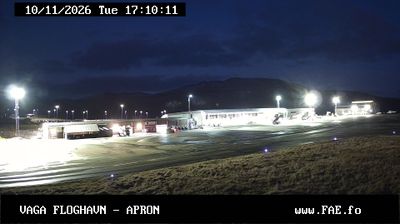
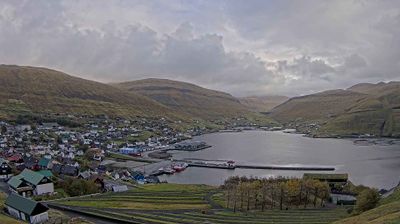

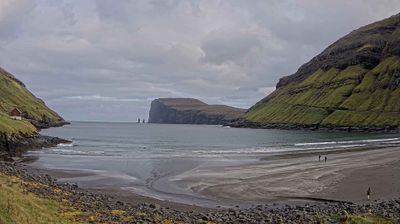
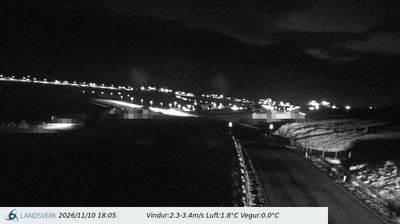

Vágar region has served as a western island community within the Faroe Islands since the Viking Age. Set on the island of Vágar, it combines steep Atlantic-facing cliffs with sheltered settlements around Sørvágur, Miðvágur and Sandavágur. Sørvágsvatn, also known as Leitisvatn, is the Faroes’ largest lake and lies close to the ocean beyond dramatic coastal escarpments. Near Gásadalur, Múlafossur drops directly toward the sea, while Vágar Airport provides the islands’ principal air connection. The Sandavágur Runestone is a notable medieval reminder of the region’s early Nordic history. View additional webcams nearby to better understand how Vágar relates to the surrounding Faroese islands.
6 webcams
Built around Norse settlements sustained by North Atlantic sea routes, the Faroe Islands developed into a self-governing archipelago within the Kingdom of Denmark. Eighteen rugged islands lie between Norway and Iceland, where steep basalt cliffs, grass-roofed houses and narrow fjords define the coast. The capital, Tórshavn, stands on Streymoy, while the sea stacks at Drangarnir and Lake Sørvágsvatn on Vágar reveal the islands’ striking geology. Faroese, descended from Old Norse, remains the everyday language, and the Løgting in Tórshavn is among the world’s oldest parliaments. Fishing and sheep farming continue to shape local life alongside a contemporary Nordic food and arts scene. Discover other points of interest through webcams located across the Faroe Islands.
50 webcams