 Muskiz: Playa de la Arena - Playa del Lastron
The landscape around Muskiz is a low, cliff-lined Cantabrian coast shaped by the Barbadun estuary, which has shaped both the built environment and local life. Playa de la Arena occupies the estuary’s seaward side, where the Barbadun reaches the Bay of Biscay; Playa del Lastrón belongs to the same rugged stretch of shore. Behind the coast, Pobeña reflects the area’s industrial past. The Itsaslur Greenway follows a former mining railway corridor once used to move iron ore from the local mining district to coastal loading installations. Beaches, headlands and this converted route connect Muskiz with the maritime and mining heritage of western Biscay.
Generated by AI


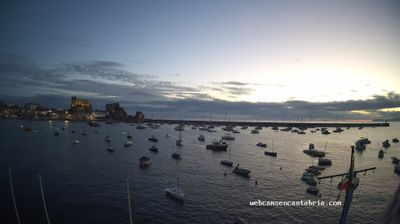
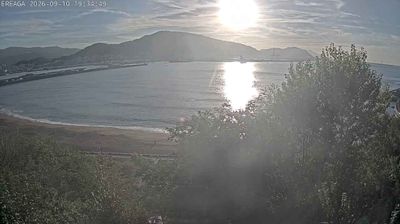





Few towns in the Basque Country have a history as closely tied to iron-ore mining as Muskiz. Set in Biscay’s Somorrostro valley, the municipality meets the Cantabrian Sea where the Barbadun River forms an estuary beside La Arena beach. Mining railways once carried ore from the surrounding hills to the coast; part of that legacy survives in the Itsaslur Greenway, a coastal route from Pobeña along the former line. Inland, the medieval Castle of Muñatones recalls the Salazar family and the chronicler Lope García de Salazar, who lived here in the 15th century. Modern Muskiz also forms part of the industrial belt west of Bilbao, while its shore and old mining corridors give the town a distinct local identity. Explore nearby webcams to see how Muskiz relates to the Barbadun estuary and Biscay’s coast.
4 webcams
The Atlantic shore of the Bay of Biscay and the ridges of the Cantabrian Mountains define much of the Autonomous Community of the Basque Country – ports, fishing, industry and farming have developed across its varied terrain. Its three provinces, Álava, Biscay and Gipuzkoa, extend from Bilbao’s estuary to the inland plains around Vitoria-Gasteiz, the regional capital. Euskara, the Basque language, shares official status with Spanish and remains central to local identity. Bilbao’s Guggenheim Museum, opened in 1997, is an internationally recognised symbol of the region’s modern cultural profile, while San Sebastián is shaped by La Concha Bay. See how the Basque Country fits into northern Spain by browsing webcams nearby.
63 webcams
Spain extends from the Cantabrian coast to the Canary Islands, encompassing Atlantic shores, Mediterranean beaches and the broad interior Meseta. The Pyrenees form its northeastern frontier, while the Guadalquivir crosses Andalusia on its way to the Atlantic. Madrid anchors the country’s political and cultural life, but distinct regional identities are central to Spain’s character: Catalonia, the Basque Country, Galicia and Andalusia each have their own languages or strong local traditions. Granada’s Alhambra is a major monument of the medieval Nasrid dynasty, and Santiago de Compostela remains the destination of the Camino de Santiago. Browse related webcams around the Iberian Peninsula to build a fuller picture of Spain.
1.4K webcams