 Mugi
Built around the mouth of the Mugi River, Mugi grew into a small fishing town on Tokushima Prefecture’s Pacific coast. The river channel and port edge form the centre of a compact settlement, where working waterfront buildings meet steep, forested hills. Mugi lies on the southeastern side of Shikoku, facing the Pacific Ocean. Its coastal identity also extends to nearby Takegashima, an island known for coral reefs and a marine park. Rather than a large resort, Mugi retains the scale of a local port community, with roads and homes following the narrow land between the river, harbour and surrounding ridges. It is a direct introduction to southern Tokushima’s deeply indented coast and maritime traditions.
Generated by AI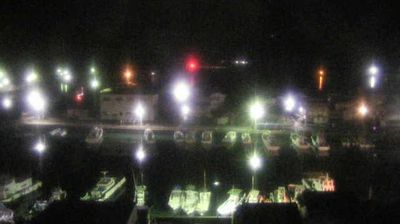




Situated along the Pacific coast of southern Shikoku, Mugi is a town whose character is shaped by the sea and its deeply indented shoreline. Mugi Bay opens toward the Pacific, while small offshore islands, including Takegashima, give the area a distinctly maritime rhythm. This section of coast lies within Muroto-Anan Kaigan Quasi-National Park, an area of rocky headlands and coastal waters. Coral communities occur in the waters around Takegashima. Fishing remains important to local life, and Mugi’s harbour retains its role as a working connection between the town and the ocean. Browse related webcams around southern Tokushima to gain a broader sense of Mugi’s Pacific coast.
2 webcams
Among Japan’s regions, Tokushima Prefecture stands out for the Yoshino River, whose broad lower reaches meet the Kii Channel near Tokushima City. Occupying eastern Shikoku, the prefecture extends from this river plain to a rugged interior and a Pacific-facing coast. At the Naruto Strait, powerful tidal currents create the famous Naruto whirlpools between Shikoku and Awaji Island. Tokushima’s best-known tradition is Awa Odori, an August dance festival in the prefectural capital, when organised groups fill the streets with music and movement. The former province of Awa also gave its name to a local indigo-dyeing tradition. Continue with other webcams from the area to trace how eastern Shikoku connects with the Kii Channel and Japan’s Inland Sea.
32 webcams
Among the countries of East Asia, Japan stands out for its volcanic archipelago, stretching from the cool north of Hokkaido to subtropical Okinawa. Mount Fuji, the nation’s highest mountain, rises above central Honshu, while the Pacific Ocean and the Seto Inland Sea have long shaped settlement, fishing and travel. Tokyo pairs dense urban life with major museums and neighbourhood traditions; Kyoto preserves temples, gardens and the legacy of Japan’s imperial court. Seasonal customs give journeys a changing rhythm, from spring cherry blossom viewing to autumn leaves. Regional cooking is equally varied, with sushi, ramen and local specialties reflecting coastlines, climate and agriculture. Explore nearby webcam locations that provide complementary perspectives on Japan’s islands, cities and mountain regions.
1.3K webcams