 Mount Thom: Nova Scotia
Among the places of Nova Scotia, Mount Thom stands out for its position on Highway 104, the Trans-Canada route across the province’s northern mainland. This rural stretch runs through rolling, forested uplands, where a divided highway and broad central median cut across a largely wooded setting. The route is an important overland connection between the New Brunswick border and communities farther east in Nova Scotia, including the approaches to Cape Breton Island. Mount Thom lies in Mi’kma’ki, the ancestral homeland of the Mi’kmaq. Rather than an urban destination, it represents the road-and-forest character of inland northern Nova Scotia, with long highway grades and extensive tree cover defining the terrain.
Generated by AI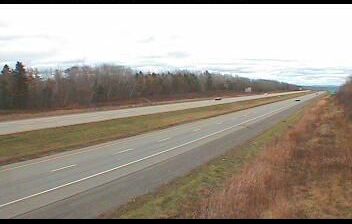

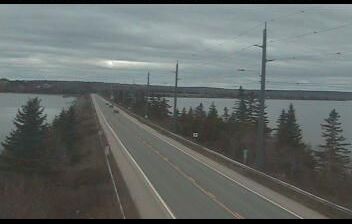
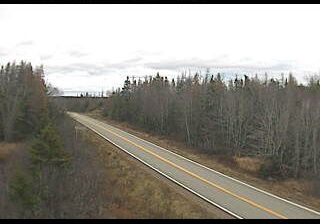


Mount Thom rises in the Cobequid Mountains of northern Nova Scotia, and its elevated, wooded terrain has made it a local focus for winter recreation. In Pictou County, the mountain lies in inland uplands south of the Northumberland Strait rather than on Nova Scotia’s better-known Atlantic coast. Mount Thom Ski Area is the community’s defining landmark, bringing skiers to a modest, locally scaled hill when conditions allow. Beyond winter, the setting reflects the province’s forested interior, where rural roads and small settlements connect the high ground with Pictou County’s coastal towns. See how Mount Thom relates to Pictou County and northern Nova Scotia by browsing webcams nearby.
1 webcam
Built around Atlantic fisheries and seaborne trade, Nova Scotia grew into a maritime province whose communities remain closely tied to the water. Its peninsula and Cape Breton Island face the Atlantic, while the Bay of Fundy shapes much of the western coast and is known for some of the world’s highest tides. Halifax, the provincial capital, is home to the star-shaped Halifax Citadel National Historic Site, recalling the city’s strategic role as a harbour. Mi’kmaq culture is fundamental to the province’s identity, alongside Acadian and Gaelic traditions. Explore further points of interest through webcams across Nova Scotia.
89 webcams
Canada has served as a frontier between French and British colonial powers since the 17th century. The world’s second-largest country extends from Atlantic shores to the Pacific and Arctic coasts, with the Canadian Shield, the Rocky Mountains, the Great Lakes and the St. Lawrence River shaping its vast geography. First Nations, Inuit and Métis peoples are central to Canada’s identity, while Ottawa’s Parliament Hill represents its federal political life. French remains the official language of Quebec, adding a distinct dimension to the country’s public culture. See how Canada connects across North America by browsing webcams in neighbouring regions.
3.5K webcams