 Mlini: Webcam - Dubrovnik
Few places in Dubrovnik-Neretva County have a history as closely tied to water-powered mills as Mlini. Set on the Adriatic coast in Župa dubrovačka, between Dubrovnik and Cavtat, it developed where short freshwater streams meet the sea. Those streams once drove the mills that gave Mlini its name, making water central to local life for generations. The settlement extends along a low, indented shoreline of small coves, rather than around a large harbour. Mlini belongs to the municipality of Župa dubrovačka, a settled coastal strip south-east of Dubrovnik. Its character comes from the meeting of spring water, the Adriatic shore and the historic Dubrovnik region.
Generated by AI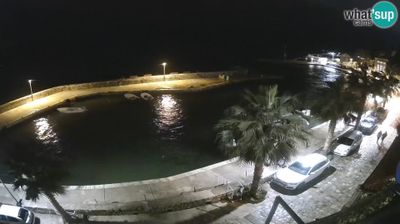


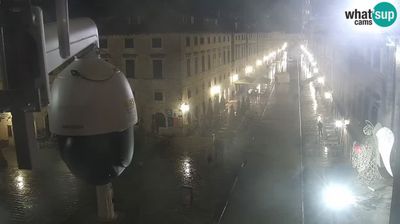





Mlini has served as a milling settlement in the Župa dubrovačka area since the Middle Ages. Set on a small Adriatic bay southeast of Dubrovnik, it takes its name from the watermills once powered by local streams. The seafront follows a sheltered stretch of the Dubrovnik-Neretva coast, where stone houses, small beaches and Mediterranean vegetation meet clear coastal water. Its long connection with the historic Republic of Dubrovnik remains part of the identity of this quiet settlement. Continue through nearby webcams to explore different parts of the Dubrovnik-Neretva coast.
2 webcams
Shaped by the sea routes of the southern Adriatic, Dubrovnik-Neretva County grew into Croatia’s southernmost county. Its territory is notably fragmented: the walled city of Dubrovnik faces the Adriatic, while the Pelješac Peninsula and the islands of Korčula, Mljet and Lastovo extend along the coast. The Neretva River reaches the sea north of Pelješac, forming Croatia’s best-known delta landscape. Dubrovnik’s Old City, once the centre of the Republic of Ragusa, is enclosed by renowned defensive walls and is UNESCO-listed. Mljet brings a quieter, wooded island character, centred on a national park with saltwater lakes. Continue through nearby webcams to explore different parts of Dubrovnik-Neretva County.
21 webcams
Croatia occupies a long Adriatic coastline in southeastern Europe. Its shore is broken into islands and sheltered coves, while the Dinaric Alps rise inland and the Danube forms part of its eastern border. Dubrovnik’s fortified old city faces the sea, and Split grew around Diocletian’s Palace, a Roman complex begun in the early fourth century. Inland, Plitvice Lakes National Park is known for terraced lakes linked by waterfalls and has been a UNESCO World Heritage Site since 1979. Istrian olive groves, Zagreb and Slavonia’s vineyards reveal distinct regional identities. Explore nearby webcam locations that provide complementary perspectives on the Adriatic coast and Croatia’s interior.
357 webcams